- Fri 12 May 2023
- nature
- Meghie Rodrigues

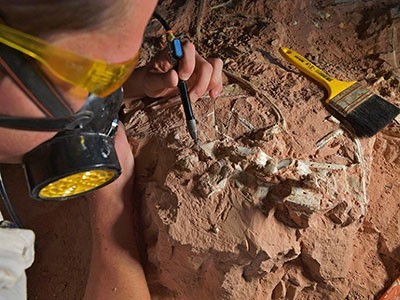
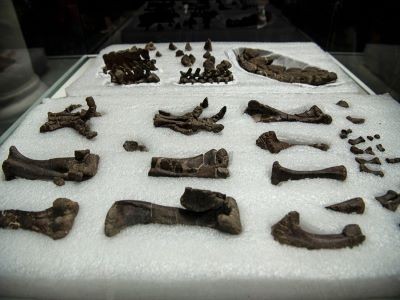
The Ubirajara jubatus fossil is a holotype — a species-defining, model specimen. credit: Felipe L. Pinheiro
After more than two years of negotiations, a controversial fossil is on its way home. The specimen — representing the first non-avian dinosaur with feather-like structures found in South America — will return to Brazil in June, according to the Guimarães Rosa Institute in Brasília, an agency housed in Brazil’s Ministry of Foreign Affairs that is focused on cultural and educational diplomacy.
How a Brazilian dinosaur sparked a movement to decolonize fossil science
The 110-million-year-old fossil, currently at the State Museum of Natural History Karlsruhe in Germany, has been at the heart of a dispute between Brazilian and German officials since December 2020. This was when a team of palaeontologists in Germany, Mexico and the United Kingdom published a research paper describing the specimen and its dinosaur, Ubirajara jubatus , in the journal Cretaceous Research 1 . The researchers had obtained the fossil in the 1990s from the Araripe Basin in Brazil and then stored it at the German museum.
However, Brazil has a law, enacted in 1942 , stating that fossils are federal property and cannot be removed from its borders without permission. The authors of the paper said that they had a permit from a Brazilian mining official allowing the Ubirajara specimen to be exported. Rafael Rayol, a public prosecutor in Juazeiro do Norte, Brazil, who is working on the Ubirajara case, told Nature that there was no explicit donation of the fossil when it was removed from Brazil. “There was a donation of boxes containing some unknown fossil material,” he said. “In theory, it is possible Ubirajara was in those boxes — in any case, the authorization issued by Brazil’s former Mineral Production Department in the 1990s did not follow the legal processes.”
Back and forth
The Ubirajara fossil’s road back to Brazil has been long and winding.
Following the paper’s publication in Cretaceous Research , an online campaign with the hashtag #UbirajaraBelongsToBrazil called for the specimen’s return, citing palaeontological colonialism , in which scientists from wealthy nations take fossils from low- and middle-income nations. Because it is the only known specimen of its kind and is well preserved, researchers consider the Ubirajara fossil to be a holotype — a gold-standard specimen used to describe a new species.

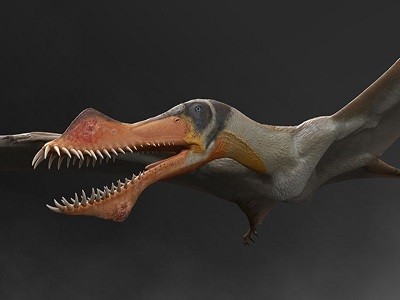
This artist’s rendering shows what Ubirajara jubatus , with feather-like spears protruding from its shoulders, might have looked like. Credit: Pavel Galvan
Holotypes, in particular, are further protected by a 1990 Brazilian law that forbids their export from Brazil. In light of the legal issues surrounding the case, Cretaceous Research eventually withdrew the paper.
In September 2021, the Karlsruhe museum said it would not repatriate the specimen. The public prosecutor’s office in Brazil then filed an official request with the German government, asking for the fossil’s return. But the German Federal Foreign Office issued a note in April of last year stating that the country would not release it.
In July 2022, however, the German state of Baden-Württemberg, where the Karlsruhe museum is located, ruled in favour of repatriation, in response to a proposal from the state’s then-science minister Theresia Bauer.
Brazil wins legal fight over 100-million-year-old fossil bounty
According to Gustavo Bezerra, a councillor at the Guimarães Rosa Institute, the Ubirajara specimen is due to be handed over in June to Brazil’s National Museum in Rio de Janeiro, during a visit by a German official. This museum burnt down in 2018 after an electrical failure in its air-conditioning system and is now being rebuilt.
“The museum wants the piece as a contribution to its reconstruction,” says Alexander Kellner, its director. But there is still some uncertainty. The museum hasn’t had contact so far with the German government regarding the transaction, Kellner says.
Brazil’s Ministry of Science, Technology and Innovation told Nature that it had designated the National Museum to receive the fossil. The German embassy in Brasília told Nature that, at the moment, Brazilian and German partners are engaging in “multi-level conversations” about how and in what context the delivery will take place.
A new era?
The Brazilian scientific community is hopeful that the Ubirajara fossil’s return will launch a new chapter for palaeontology worldwide.
“The return of this material means a lot,” says Aline Ghilardi, a palaeontologist at the Federal University of Rio Grande do Norte in Natal, Brazil, and one of the researchers who spearheaded the #UbirajaraBelongsToBrazil campaign.
How rich countries skew the fossil record
It is an “important message against science colonialism in the twenty-first century, and opens a strong precedent for more fossils to go back to their countries of origin”, she says. But she worries that there are still battles to be fought over “internal colonialism” — in which institutions in richer regions of a country exploit poorer ones. In particular, she is concerned about the Ubirajara fossil going to the National Museum rather than the Plácido Cidade Nuvens Palaeontological Museum in Santana do Cariri, which is near the Araripe Basin where the specimen was collected.
To Hermínio Araújo, a palaeontologist at the Federal University of Rio de Janeiro who is also president of the Brazilian Society of Palaeontology, the fossil’s return sends another important message: efforts such as the one to return Ubirajara are important, and show the power that a community can have when it “speaks out and denounces such situations”.
article_text: After more than two years of negotiations, a controversial fossil is on its way home. The specimen — representing the first non-avian dinosaur with feather-like structures found in South America — will return to Brazil in June, according to the Guimarães Rosa Institute in Brasília, an agency housed in Brazil’s Ministry of Foreign Affairs that is focused on cultural and educational diplomacy.
How a Brazilian dinosaur sparked a movement to decolonize fossil science
The 110-million-year-old fossil, currently at the State Museum of Natural History Karlsruhe in Germany, has been at the heart of a dispute between Brazilian and German officials since December 2020. This was when a team of palaeontologists in Germany, Mexico and the United Kingdom published a research paper describing the specimen and its dinosaur, Ubirajara jubatus, in the journal Cretaceous Research1. The researchers had obtained the fossil in the 1990s from the Araripe Basin in Brazil and then stored it at the German museum. However, Brazil has a law, enacted in 1942, stating that fossils are federal property and cannot be removed from its borders without permission. The authors of the paper said that they had a permit from a Brazilian mining official allowing the Ubirajara specimen to be exported. Rafael Rayol, a public prosecutor in Juazeiro do Norte, Brazil, who is working on the Ubirajara case, told Nature that there was no explicit donation of the fossil when it was removed from Brazil. “There was a donation of boxes containing some unknown fossil material,” he said. “In theory, it is possible Ubirajara was in those boxes — in any case, the authorization issued by Brazil’s former Mineral Production Department in the 1990s did not follow the legal processes.” The Ubirajara fossil’s road back to Brazil has been long and winding. Following the paper’s publication in Cretaceous Research, an online campaign with the hashtag #UbirajaraBelongsToBrazil called for the specimen’s return, citing palaeontological colonialism, in which scientists from wealthy nations take fossils from low- and middle-income nations. Because it is the only known specimen of its kind and is well preserved, researchers consider the Ubirajara fossil to be a holotype — a gold-standard specimen used to describe a new species. Holotypes, in particular, are further protected by a 1990 Brazilian law that forbids their export from Brazil. In light of the legal issues surrounding the case, Cretaceous Research eventually withdrew the paper. In September 2021, the Karlsruhe museum said it would not repatriate the specimen. The public prosecutor’s office in Brazil then filed an official request with the German government, asking for the fossil’s return. But the German Federal Foreign Office issued a note in April of last year stating that the country would not release it. In July 2022, however, the German state of Baden-Württemberg, where the Karlsruhe museum is located, ruled in favour of repatriation, in response to a proposal from the state’s then-science minister Theresia Bauer.
Brazil wins legal fight over 100-million-year-old fossil bounty
According to Gustavo Bezerra, a councillor at the Guimarães Rosa Institute, the Ubirajara specimen is due to be handed over in June to Brazil’s National Museum in Rio de Janeiro, during a visit by a German official. This museum burnt down in 2018 after an electrical failure in its air-conditioning system and is now being rebuilt. “The museum wants the piece as a contribution to its reconstruction,” says Alexander Kellner, its director. But there is still some uncertainty. The museum hasn’t had contact so far with the German government regarding the transaction, Kellner says. Brazil’s Ministry of Science, Technology and Innovation told Nature that it had designated the National Museum to receive the fossil. The German embassy in Brasília told Nature that, at the moment, Brazilian and German partners are engaging in “multi-level conversations” about how and in what context the delivery will take place. The Brazilian scientific community is hopeful that the Ubirajara fossil’s return will launch a new chapter for palaeontology worldwide. “The return of this material means a lot,” says Aline Ghilardi, a palaeontologist at the Federal University of Rio Grande do Norte in Natal, Brazil, and one of the researchers who spearheaded the #UbirajaraBelongsToBrazil campaign.
How rich countries skew the fossil record
It is an “important message against science colonialism in the twenty-first century, and opens a strong precedent for more fossils to go back to their countries of origin”, she says. But she worries that there are still battles to be fought over “internal colonialism” — in which institutions in richer regions of a country exploit poorer ones. In particular, she is concerned about the Ubirajara fossil going to the National Museum rather than the Plácido Cidade Nuvens Palaeontological Museum in Santana do Cariri, which is near the Araripe Basin where the specimen was collected. To Hermínio Araújo, a palaeontologist at the Federal University of Rio de Janeiro who is also president of the Brazilian Society of Palaeontology, the fossil’s return sends another important message: efforts such as the one to return Ubirajara are important, and show the power that a community can have when it “speaks out and denounces such situations”. vocabulary:
{'Palaeontology': '古生物学,指研究古生物的科学,包括古生物的形态、结构、分布、演化、生态等','Ubirajara jubatus': '一种非鸟类恐龙,具有羽毛状结构,发现于南美洲','Holotype': '一种金标准标本,用于描述新物种','Decolonize': '去殖民化,指政治上的解放,以及文化上的解放','Palaeontological colonialism': '古生物学殖民主义,指富裕国家的科学家从低收入和中等收入国家获取化石','Repatriate': '遣返,指将移民或其他外国人遣返到其原籍国','Cretaceous Research': '白垩纪研究,指研究白垩纪的科学期刊','Araripe Basin': '阿拉里佩盆地,位于巴西东北部,是一个古生物多样性丰富的地区','Mineral Production Department': '矿产生产部,指巴西的矿产生产部门','Baden-Württemberg': '巴登-符腾堡,位于德国西南部,是一个联邦州','Theresia Bauer': '特雷西亚·鲍尔,德国前科学部长','Guimarães Rosa Institute': '吉马良斯·罗萨研究所,位于巴西布莱斯利亚,专注于文化和教育外交','Electrical failure': '电气故障,指电气设备出现故障','Air-conditioning system': '空调系统,指空调设备的系统','Multi-level conversations': '多级对话,指不同级别的对话','Internal colonialism': '内部殖民主义,指更富裕的地区利用较贫穷地区的资源'} readguide:
{'reading_guide': '本文讲述了一块拥有羽毛状结构的非鸟类恐龙化石,它在德国的卡尔斯鲁厄国家自然历史博物馆展出,但它最终将回到巴西,这是一个关于巴西恐龙的历史事件,也是一个反对科学殖民主义的运动。文章提出了一些问题,比如:这块化石是如何从巴西被带走的?为什么它最终会回到巴西?什么是科学殖民主义?什么是内部殖民主义?社会如何反对这种情况?'} long_sentences:
{'sentence 1': 'It is an “important message against science colonialism in the twenty-first century, and opens a strong precedent for more fossils to go back to their countries of origin”, she says.', 'sentence 2': 'To Hermínio Araújo, a palaeontologist at the Federal University of Rio de Janeiro who is also president of the Brazilian Society of Palaeontology, the fossil’s return sends another important message: efforts such as the one to return Ubirajara are important, and show the power that a community can have when it “speaks out and denounces such situations”.'}
sentence 1: 这是一个“重要的反科学殖民主义的信息,为更多的化石回到它们的原产国开辟了一个强有力的先例”,她说。句子结构分析:这是一个定语从句,修饰message,定语从句中的she指代前文提到的Aline Ghilardi,句子的主干是It is an “important message”。语义分析:句子表达的是Aline Ghilardi认为,Ubirajara化石的回归对于反科学殖民主义来说是一个重要的信息,并且为更多的化石回到它们的原产国开辟了一个强有力的先例。
sentence 2: 对于里约热内卢联邦大学的古生物学家Hermínio Araújo,也是巴西古生物学会主席,化石的回归传递了另一个重要的信息:像Ubirajara回归这样的努力是重要的,并且展示了社区在“发出声音并谴责这种情况”时所拥有的力量。句子结构分析:这是一个定语从句,修饰message,定语从句中的Hermínio Araújo指代前文提到的Hermínio Araújo,句子的主干是The fossil’s return sends another important message。语义分析:句子表达的是Hermínio Araújo认为,Ubirajara化石的回归传递了另一个重要的信息,即像Ubirajara回归这样的努力是重要的,并且展示了社区在“发出声音并谴责这种情况”时所拥有的力量。