- Wed 26 April 2023
- nature
- Gemma Conroy, Miryam Naddaf

M1 was due to land in the previously unexplored Atlas Crater (right) in the Moon’s northern hemisphere. Credit: Damian Peach/Science Photo Library
A Japanese spacecraft has probably crashed during its attempt to land on the Moon.
The HAKUTO-R Mission 1 (M1) lander — developed by Tokyo-based company ispace — was due to touch down in the Moon’s Atlas crater on 25 April at around 16:40 universal time, which would have made it the first successful lunar landing accomplished by a commercial mission .
But the ispace team lost contact with the craft when it was around 90 metres above the lunar surface, and was unable to re-establish communication after the landing as planned. “We have to assume that we could not complete the landing,” announced ispace chief executive Takeshi Hakamada.
Private Moon mission prepares for historic landing attempt
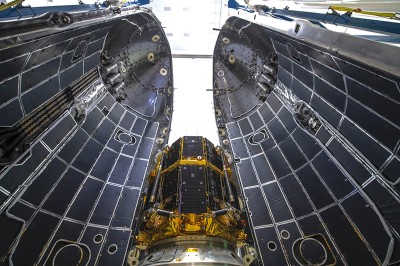
Hours later, ispace said in a statement that there was a “high probability” M1 had made a crash-landing on the Moon . The company says its engineers are still investigating exactly what happened. The 2.3-metre-tall lander was in an upright position during its final approach but was running low on fuel. Data also show that the spacecraft picked up speed as it descended towards the lunar surface.
“It was doing what it should have done, which is descending vertically with its engines keeping it to the low velocity,” says Lionel Wilson, a geophysicist at Lancaster University, UK. But for the last few hundred metres, “it was in freefall”, he adds. “It just dropped like a stone.”
“In the final touch down phase the telemetry showed that it was at zero altitude ... the lander thought it was on the lunar surface, but in reality it wasn’t,” says Ryo Ujiie, ispace’s chief technology officer. “The lander kept descending and then it ran out of propellant. After that, we observed some really unstable behaviour and an increase in velocity.”
“We are still investigating what caused the gap between the estimated altitude and the actual altitude. This was the main cause of the freefall,” Ujiie adds. “We had a sensor that measured the distance between the lander and the ground. That measurement might have been wrong. The software might have been wrong. We still don’t know.”
Near miss
Simeon Barber, a lunar scientist at The Open University in Milton Keynes, UK, says that the failed attempt demonstrates how challenging it is to accomplish a lunar landing. “Everything has got to happen perfectly in order to get that signal back saying ‘we’ve landed on the Moon successfully’,” he says. “They were close.”
The lander was carrying the United Arab Emirates’ 50-centimetre-long Rashid rover, which was developed by the Mohammed bin Rashid Space Centre in Dubai. The rover’s aim was to study particles in the lunar soil and investigate the geological properties of the Moon’s surface with its cameras and probe. Also on board was a two-wheeled robot developed by the Japanese space agency, JAXA, and a multi-camera system built by Canadensys Aerospace, a space-systems company based in Toronto, Canada.
UAE ramps up space ambitions with Arab world’s first Moon mission
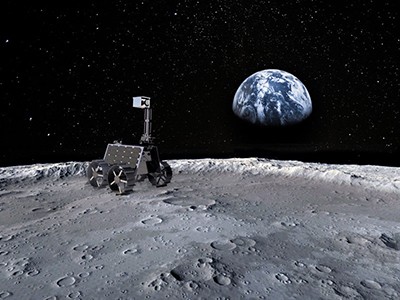
M1 launched on 11 December 2022 from Cape Canaveral, Florida, on board a SpaceX Falcon 9 rocket. On 21 March, it entered lunar orbit; it reached 100 kilometres above the Moon’s surface three weeks later. “We had 10 success milestones for this mission, and we completed 8,” says Ujiie. He adds that data acquired duringthe landing sequence will offer insights for ispace’s second attempt to land on the Moon, planned for 2024. “Our team has more confidence in the flight operation because we already know how to operate the lander,” he says. “Great challenges make great teams.”
Barber agrees. “They will have learnt a huge amount about how to get to a certain point,” he says. “It puts them in such a strong position for next time.”
article_text: A Japanese spacecraft has probably crashed during its attempt to land on the Moon. The HAKUTO-R Mission 1 (M1) lander — developed by Tokyo-based company ispace — was due to touch down in the Moon’s Atlas crater on 25 April at around 16:40 universal time, which would have made it the first successful lunar landing accomplished by a commercial mission. But the ispace team lost contact with the craft when it was around 90 metres above the lunar surface, and was unable to re-establish communication after the landing as planned. “We have to assume that we could not complete the landing,” announced ispace chief executive Takeshi Hakamada.
Private Moon mission prepares for historic landing attempt
Hours later, ispace said in a statement that there was a “high probability” M1 had made a crash-landing on the Moon. The company says its engineers are still investigating exactly what happened. The 2.3-metre-tall lander was in an upright position during its final approach but was running low on fuel. Data also show that the spacecraft picked up speed as it descended towards the lunar surface. “It was doing what it should have done, which is descending vertically with its engines keeping it to the low velocity,” says Lionel Wilson, a geophysicist at Lancaster University, UK. But for the last few hundred metres, “it was in freefall”, he adds. “It just dropped like a stone.” “In the final touch down phase the telemetry showed that it was at zero altitude ... the lander thought it was on the lunar surface, but in reality it wasn’t,” says Ryo Ujiie, ispace’s chief technology officer. “The lander kept descending and then it ran out of propellant. After that, we observed some really unstable behaviour and an increase in velocity.” “We are still investigating what caused the gap between the estimated altitude and the actual altitude. This was the main cause of the freefall,” Ujiie adds. “We had a sensor that measured the distance between the lander and the ground. That measurement might have been wrong. The software might have been wrong. We still don’t know.” Simeon Barber, a lunar scientist at The Open University in Milton Keynes, UK, says that the failed attempt demonstrates how challenging it is to accomplish a lunar landing. “Everything has got to happen perfectly in order to get that signal back saying ‘we’ve landed on the Moon successfully’,” he says. “They were close.” The lander was carrying the United Arab Emirates’ 50-centimetre-long Rashid rover, which was developed by the Mohammed bin Rashid Space Centre in Dubai. The rover’s aim was to study particles in the lunar soil and investigate the geological properties of the Moon’s surface with its cameras and probe. Also on board was a two-wheeled robot developed by the Japanese space agency, JAXA, and a multi-camera system built by Canadensys Aerospace, a space-systems company based in Toronto, Canada.
UAE ramps up space ambitions with Arab world’s first Moon mission
M1 launched on 11 December 2022 from Cape Canaveral, Florida, on board a SpaceX Falcon 9 rocket. On 21 March, it entered lunar orbit; it reached 100 kilometres above the Moon’s surface three weeks later. “We had 10 success milestones for this mission, and we completed 8,” says Ujiie. He adds that data acquired duringthe landing sequence will offer insights for ispace’s second attempt to land on the Moon, planned for 2024. “Our team has more confidence in the flight operation because we already know how to operate the lander,” he says. “Great challenges make great teams.” Barber agrees. “They will have learnt a huge amount about how to get to a certain point,” he says. “It puts them in such a strong position for next time.” vocabulary:
{'Telemetry': '遥测:指远程收集的数据,是指从远程发射的信号,用来描述某种物理现象的数据','Propellant': '推进剂:指用于推动飞行器的物质,如火箭发动机的燃料','Geophysicist': '地球物理学家:研究地球物理学的科学家','Freefall': '自由落体:物体自重力作用而不受其他力影响而迅速下降的运动状态','Telemetry': '遥测:指远程收集的数据,是指从远程发射的信号,用来描述某种物理现象的数据','Propellant': '推进剂:指用于推动飞行器的物质,如火箭发动机的燃料','Geophysicist': '地球物理学家:研究地球物理学的科学家','Freefall': '自由落体:物体自重力作用而不受其他力影响而迅速下降的运动状态','Upright': '直立:竖立的,垂直的','Velocity': '速度:物体在某一方向上的运动速度','Telemetry': '遥测:指远程收集的数据,是指从远程发射的信号,用来描述某种物理现象的数据','Propellant': '推进剂:指用于推动飞行器的物质,如火箭发动机的燃料','Geophysicist': '地球物理学家:研究地球物理学的科学家','Freefall': '自由落体:物体自重力作用而不受其他力影响而迅速下降的运动状态','Upright': '直立:竖立的,垂直的','Velocity': '速度:物体在某一方向上的运动速度','Falcon': '猎鹰:一种鸟类,也是SpaceX公司的火箭名称','Mohammed': '穆罕默德:伊斯兰教的创始人','Rashid': '拉希德:阿拉伯语中的“正义”的意思','Cameras': '摄像机:用于拍摄影像的设备','Probe': '探针:用于探测物理现象的仪器','Cape': '海角:指位于美国佛罗里达州的卡珀科恩斯角','Canadensys': '加拿大太空系统:加拿大太空系统公司,位于多伦多','Milton': '米尔顿:位于英国埃塞克斯郡的一个小镇','Keynes': '凯恩斯:英国经济学家','Rover': '漫游者:指探测器、机器人等在月球表面漫游的设备'} readguide:
{'reading_guide': '这篇文章讲述了一架日本宇宙飞船在尝试登陆月球时可能已经坠毁的故事。文章介绍了这架宇宙飞船的发射、进入月球轨道以及最终失败的着陆尝试,并讨论了这次失败的尝试给这架宇宙飞船的下一次登陆月球带来的启发。'} long_sentences:
{'sentence 1': 'Data also show that the spacecraft picked up speed as it descended towards the lunar surface.', 'sentence 2': 'The lander was carrying the United Arab Emirates’ 50-centimetre-long Rashid rover, which was developed by the Mohammed bin Rashid Space Centre in Dubai.'}
Sentence 1: 数据也表明,宇宙飞船在向月球表面下降时速度加快。句子结构:主语是Data,谓语是show,show后面是that引导的宾语从句,宾语从句中,the spacecraft是主语,picked up speed是谓语,as it descended towards the lunar surface是状语。语义上,表达的是宇宙飞船在向月球表面下降时速度加快。
Sentence 2: 该着陆器携带了阿联酋50厘米长的Rashid漫游者,由迪拜的穆罕默德·本·拉希德太空中心开发。句子结构:主语是The lander,谓语是was carrying,carrying后面是宾语the United Arab Emirates’ 50-centimetre-long Rashid rover,which引导的定语从句,定语从句中,which是主语,was developed by the Mohammed bin Rashid Space Centre in Dubai是谓语。语义上,表达的是该着陆器携带了阿联酋50厘米长的Rashid漫游者,由迪拜的穆罕默德·本·拉希德太空中心开发。