- Mon 08 May 2023
- nature
- Max Kozlov

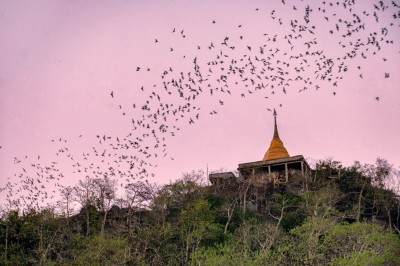
Research organization EcoHealth Alliance plans to investigate coronaviruses in bats. Milehightraveller/Getty
The US National Institutes of Health (NIH) has reinstated a grant to a highly scrutinized research organization that studies bat coronaviruses — but the agency has placed severeal stipulations on the scope of the research and on the organization’s accounting practices.
The move caps a years-long saga that has thrust the EcoHealth Alliance, a small non-profit organization in New York City, into the political fray for its collaborations with the Wuhan Institute of Virology (WIV) in China. In April 2020, after then-US-president Donald Trump hinted that SARS-CoV-2 originated in a WIV laboratory, the NIH terminated EcoHealth’s grant. Its goal was to study how coronaviruses, such as SARS-CoV-2, jump from bats to humans. A few months later, the NIH reinstated and immediately suspended the award until certain conditions were met that, at the time, EcoHealth said were impossible to complete.
The shifting sands of ‘gain-of-function’ research
Researchers who spoke to Nature applaud the renewal, adding that this type of research is essential to avert the next pandemic. They claim that the NIH’s termination and subsequent suspension were politically motivated, and that, although long overdue, this renewal ends — for now — a drama-filled exchange between the agency and EcoHealth.
“It’s about goddam time,” says Gerald Keusch, associate director of the National Emerging Infectious Diseases Laboratory Institute at Boston University in Massachusetts, who organized researchers to push back against EcoHealth’s grant termination in 2020. “The integrity of science requires a barrier against political interference,” he says.
The NIH “routinely considers processes and measures for strengthening [its] oversight over federal funds” and has been working with EcoHealth to strengthen its “administrative processes to meet NIH’s expectations”, says Amanda Fine, a spokesperson for the NIH.
Lengthy list of conditions
Although the organization will now be able to continue its bat coronavirus research for the first time since the saga began, the NIH placed an extensive list of restrictions on the four-year, US$2.9-million award. None of the researchers who spoke to Nature had ever seen a grant with so many stipulations.
Among other things, EcoHealth is specifically forbidden from performing any in-country research in China, including with the WIV, or collecting any new samples from vertebrates — such as bats. The revised grant also mandates greater scrutiny of EcoHealth’s finances and accounting practices, driven in part by a federal watchdog report, released in January, finding that EcoHealth had misreported about $90,000 in expenses. The report also faulted the NIH for improperly terminating EcoHealth’s grant.
In addition, EcoHealth will be forbidden from performing any work that is deemed by the NIH’s parent organization, the US Department of Health and Human Services (HHS), to have the potential to enhance the virulence or transmission of a virus. This restriction stems, in part, from criticism that research done at WIV and funded by an EcoHealth subaward qualified as ‘gain of function’ research.
Disputed research
Congressional Republicans have alleged that this research, which involved attaching spike proteins from wild bat coronaviruses to an unrelated virus to determine whether the wild pathogens could infect human airway cells, should have undergone HHS review. Anthony Fauci, then-director of the National Institute for Allergy and Infectious Disease, has said the agency concluded that these experiments did not meet the bar to undergo such review, and noted that the WIV did not intend to enhance the viruses.
Tens of thousands of people exposed to bat coronaviruses each year
Virologists say this type of research is essential for developing vaccines and therapeutics against emerging pathogens and for understanding how likely a pathogen is to spark a pandemic. The NIH and HHS have been finalizing guidance that will probably tighten the oversight of such research in the United States.
“I don’t know if any other single grantee from NIH has been subjected to this level of oversight,” says Peter Daszak, president of EcoHealth Alliance. Yet he is “positive and optimistic” about the grant restart, despite all the restrictions. A key priority for the newly released funds will be analysing nearly 300 partial or complete genomes of SARS-related coronaviruses from samples that the organization collected before the funding halt, he says.
Third rail of virology
These restrictions seem reasonable, in light of the enormous public attention to and scrutiny of gain-of-function research, says Lawrence Gostin, a health-law and policy specialist at Georgetown University in Washington DC. Still, Gostin says he is surprised the agency restarted its funding for EcoHealth, given that it has been the “third rail of politics” the last few years.
Angela Rasmussen, a virologist at the University of Saskatchewan in Saskatoon, Canada, says she is pleasantly surprised to see the grant renewed, but worries about the “terrible precedent” that the NIH set by “arbitrarily” terminating an award on the basis of “unfounded rumours” regarding the origins of SARS-CoV-2. She hopes that these same restrictions will not apply to other scientists doing similar work, but is encouraged by the number of research groups that are now studying coronaviruses following the COVID-19 pandemic.
article_text: The US National Institutes of Health (NIH) has reinstated a grant to a highly scrutinized research organization that studies bat coronaviruses — but the agency has placed severeal stipulations on the scope of the research and on the organization’s accounting practices. The move caps a years-long saga that has thrust the EcoHealth Alliance, a small non-profit organization in New York City, into the political fray for its collaborations with the Wuhan Institute of Virology (WIV) in China. In April 2020, after then-US-president Donald Trump hinted that SARS-CoV-2 originated in a WIV laboratory, the NIH terminated EcoHealth’s grant. Its goal was to study how coronaviruses, such as SARS-CoV-2, jump from bats to humans. A few months later, the NIH reinstated and immediately suspended the award until certain conditions were met that, at the time, EcoHealth said were impossible to complete.
The shifting sands of ‘gain-of-function’ research
Researchers who spoke to Nature applaud the renewal, adding that this type of research is essential to avert the next pandemic. They claim that the NIH’s termination and subsequent suspension were politically motivated, and that, although long overdue, this renewal ends — for now — a drama-filled exchange between the agency and EcoHealth. “It’s about goddam time,” says Gerald Keusch, associate director of the National Emerging Infectious Diseases Laboratory Institute at Boston University in Massachusetts, who organized researchers to push back against EcoHealth’s grant termination in 2020. “The integrity of science requires a barrier against political interference,” he says. The NIH “routinely considers processes and measures for strengthening [its] oversight over federal funds” and has been working with EcoHealth to strengthen its “administrative processes to meet NIH’s expectations”, says Amanda Fine, a spokesperson for the NIH. Although the organization will now be able to continue its bat coronavirus research for the first time since the saga began, the NIH placed an extensive list of restrictions on the four-year, US$2.9-million award. None of the researchers who spoke to Nature had ever seen a grant with so many stipulations. Among other things, EcoHealth is specifically forbidden from performing any in-country research in China, including with the WIV, or collecting any new samples from vertebrates — such as bats. The revised grant also mandates greater scrutiny of EcoHealth’s finances and accounting practices, driven in part by a federal watchdog report, released in January, finding that EcoHealth had misreported about $90,000 in expenses. The report also faulted the NIH for improperly terminating EcoHealth’s grant. In addition, EcoHealth will be forbidden from performing any work that is deemed by the NIH’s parent organization, the US Department of Health and Human Services (HHS), to have the potential to enhance the virulence or transmission of a virus. This restriction stems, in part, from criticism that research done at WIV and funded by an EcoHealth subaward qualified as ‘gain of function’ research. Congressional Republicans have alleged that this research, which involved attaching spike proteins from wild bat coronaviruses to an unrelated virus to determine whether the wild pathogens could infect human airway cells, should have undergone HHS review. Anthony Fauci, then-director of the National Institute for Allergy and Infectious Disease, has said the agency concluded that these experiments did not meet the bar to undergo such review, and noted that the WIV did not intend to enhance the viruses.
Tens of thousands of people exposed to bat coronaviruses each year
Virologists say this type of research is essential for developing vaccines and therapeutics against emerging pathogens and for understanding how likely a pathogen is to spark a pandemic. The NIH and HHS have been finalizing guidance that will probably tighten the oversight of such research in the United States. “I don’t know if any other single grantee from NIH has been subjected to this level of oversight,” says Peter Daszak, president of EcoHealth Alliance. Yet he is “positive and optimistic” about the grant restart, despite all the restrictions. A key priority for the newly released funds will be analysing nearly 300 partial or complete genomes of SARS-related coronaviruses from samples that the organization collected before the funding halt, he says. These restrictions seem reasonable, in light of the enormous public attention to and scrutiny of gain-of-function research, says Lawrence Gostin, a health-law and policy specialist at Georgetown University in Washington DC. Still, Gostin says he is surprised the agency restarted its funding for EcoHealth, given that it has been the “third rail of politics” the last few years. Angela Rasmussen, a virologist at the University of Saskatchewan in Saskatoon, Canada, says she is pleasantly surprised to see the grant renewed, but worries about the “terrible precedent” that the NIH set by “arbitrarily” terminating an award on the basis of “unfounded rumours” regarding the origins of SARS-CoV-2. She hopes that these same restrictions will not apply to other scientists doing similar work, but is encouraged by the number of research groups that are now studying coronaviruses following the COVID-19 pandemic. vocabulary:
{'Stipulations': '规定:限制,条件,要求', 'Saga': '传奇:指一系列长期的事件,特别是指一系列激动人心的事件', 'Thrust': '把…推向:使处于某种状态或境地', 'Collaborations': '合作:两个或多个人或组织之间的合作关系', 'Reinstated': '恢复:使恢复原状', 'Scrutinized': '审查:仔细检查', 'Gain-of-function': '增加功能:指增加某种特定功能的研究', 'Avert': '避免:防止发生', 'Integrity': '完整:指完整性,完整的状态', 'Interference': '干涉:指干扰,干预', 'Stipulations': '规定:限制,条件,要求', 'Vertebrates': '脊椎动物:指有脊椎的动物', 'Scrutiny': '审查:仔细检查', 'Misreported': '报告错误:指报告错误的信息', 'Faulted': '指责:指指责,把…归咎于', 'Mandates': '授权:授权某人做某事', 'Enhance': '增强:指增强,提高', 'Transmission': '传播:指传播,传递', 'Virulence': '毒力:指病原体的毒力', 'Alleged': '指控:指控,指摘', 'Therapeutics': '治疗:指治疗,治疗方法', 'Tighten': '加强:指加强,增强', 'Oversight': '监督:指监督,管理', 'Arbitrarily': '武断地:指毫无根据地,主观地', 'Precedent': '先例:指先例,先例行为', 'Enormous': '巨大的:指巨大的,庞大的'} readguide:
{'reading_guide': '本文讲述了美国国家卫生研究院(NIH)重新批准了一项研究机构的资助,该机构研究蝙蝠冠状病毒,但是该机构对研究范围和会计实务施加了严格的限制。文章指出,这项资助的恢复是政治性的,但是研究人员认为,这项研究对于防止下一次流行病的发生至关重要。文章还指出,NIH对EcoHealth的财务和会计实务施加了更多的审查,并禁止EcoHealth在中国境内进行任何研究,包括与武汉病毒研究所(WIV)的合作,以及收集任何新的脊椎动物样本(如蝙蝠)。最后,文章指出,NIH的这一举措可能会给其他研究人员带来不利影响,但是也有助于更多的研究小组开展冠状病毒的研究。'} long_sentences:
{'sentence 1': 'Researchers who spoke to Nature applaud the renewal, adding that this type of research is essential to avert the next pandemic. They claim that the NIH’s termination and subsequent suspension were politically motivated, and that, although long overdue, this renewal ends — for now — a drama-filled exchange between the agency and EcoHealth.', 'sentence 2': 'Virologists say this type of research is essential for developing vaccines and therapeutics against emerging pathogens and for understanding how likely a pathogen is to spark a pandemic. The NIH and HHS have been finalizing guidance that will probably tighten the oversight of such research in the United States.'}
sentence 1:研究人員對自然對此次恢復表示歡迎,並表示這種研究對防止下一次流行病至關重要。他們聲稱NIH的終止和隨後的暫停是出於政治動機,而且,儘管遲到了,但這次恢復終止了NIH和EcoHealth之間曲折的交流。
句子結構分析:這是一個長句,主要分成兩個部分,第一部分是對研究人員對恢復的歡迎,第二部分是對NIH的終止和暫停的評論。句子的主詞是“researchers”,謂語動詞是“applaud”,表達對恢復的歡迎;謂語動詞是“claim”,表達對NIH的終止和暫停的政治動機的看法。
語義分析:句子表達的是研究人員對NIH恢復EcoHealth的研究資助表示歡迎,並指出NIH的終止和暫停是出於政治動機,而這次恢復終止了NIH和EcoHealth之間曲折的交流。
sentence 2:病毒學家表示,這種研究對於開發對新興病原體的疫苗和治療藥物以及了解病原體有多大可能引發流行病至關重要。NIH和HHS一直在敲定將可能加強對美國此類研究的監管的指導方針。
句子結構分析:這是一個長句,主要分成兩個部分,第一部分是對研究的重要性,第二部分是對NIH和HHS的指導方針的介紹。句子的主詞是“virologists”,謂語動詞是“say”,表達對研究的重要性;謂語動詞是“have been finalizing”,表達對NIH和HHS的指導方針的介紹。
語義分析:句子表達的是病毒學家表示,這種研究對於開發對新興病原體的疫苗和治療藥物以及了解病原體有多大可能引發流行病至關重要,而NIH和HHS一直在敲定將可能加強對美國此類研究的監管的指導方針。