- Wed 26 April 2023
- nature
- Natasha Gilbert

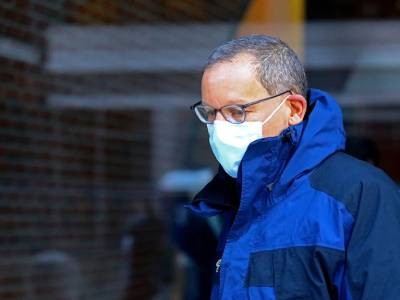
Nanoscience pioneer Charles Lieber received a lighter sentence than the US government requested. Credit: Michael Dwyer/AP/Shutterstock
Charles Lieber, a prominent chemist convicted of hiding his research ties to China , will not serve any more prison time, a federal judge has ruled.
On 26 April, Massachusetts district judge Rya Zobel sentenced Lieber, formerly at Harvard University in Cambridge, Massachusetts, to time already served — which amounted to two days of incarceration — plus two years of supervised release. He will spend the first six months of that release confined to his home. Lieber was also ordered to pay a US$50,000 fine, as well as $34,000 to the Internal Revenue Service (IRS), which he has already submitted.
What Charles Lieber’s conviction means for science
Marc Mukasey, Lieber’s lawyer, told Nature in a statement, “We are grateful for the outcome.”
Lieber was found guilty by a jury in December 2021 on six counts of making false statements to federal agents, filing false tax returns and failing to disclose a foreign bank account in China. He told investigators that he was not associated with a Chinese recruitment programme — the Thousand Talents Plan — when in fact he was selected to lead a laboratory at the Wuhan University of Technology (WUT) in China. Participating in a foreign talent-recruitment programme is not illegal, but lying to federal agents about it is.
Between 2012 and 2017, Lieber was paid around $200,000 for his work at the WUT — income that he illegally hid from the IRS, according to the court ruling. At the same time, he led a research team that received millions of US dollars in federal grants from agencies including the US Department of Defense and the National Institutes of Health.
Lieber, who was arrested in January 2020, was one of the first academic researchers tried under the US Department of Justice’s now-defunct China Initiative — a government programme launched in 2018 to safeguard US labs and businesses from espionage. He was one of the few scientists not of Chinese heritage to be charged under the initiative, al though his was one of the most-watched cases , given his stature in the research community. Lieber’s lab had developed injectable brain implants, and he won the Wolf Prize in Chemistry in 2012, which some consider a precursor to the Nobel prize.
A significant sentence
The US government asked the judge to sentence Lieber to 90 days in prison, with one year of supervised release and a $150,000 fine. Lieber’s legal team requested no prison time, citing his ill health. Lieber, aged 64, has follicular lymphoma, a blood cancer for which there is no cure. In Lieber’s sentencing memorandum, his lawyers stated that for the past three years, the chemist has been mostly confined to his home and to hospitals. After 30 years at Harvard University, including as the chair of its chemistry department, Lieber retired in March, according to student newspaper The Harvard Crimson .
Harvard chemist on trial: a guide to the Charles Lieber case

Former colleagues and students wrote letters of support for Lieber that were submitted in his sentencing memorandum. Daniel Kahne, who researches antibiotic resistance at Harvard, said Lieber put huge effort into supporting and nurturing his students. Another Harvard colleague, Adam Cohen, who develops tools to study electrical signaling in the nervous system, wrote that although Lieber was a widely recognized, brilliant scientist he was also modest.
Frank Wu, a legal specialist on the China Initiative and president of Queens College, City University of New York, told Nature that Lieber’s sentencing is significant and that it will influence similar cases.
“Everyone who cares about the China Initiative should care about this specific case,” he wrote in a statement to Nature .
Wu adds that Lieber’s sentence is consistent with the outcome of other China Initiative cases and similar prosecutions in which judges of all backgrounds have shown scepticism about the US government’s efforts to hold researchers accountable for hiding their ties to China.
Jenny Lee, a social scientist who studies research collaborations at the University of Arizona in Tucson says that the sentence is fair. “Dr Lieber already paid a huge cost in his damaged professional reputation. He was made an example of to the broader scientific community about undisclosed ties with China.”
article_text: Charles Lieber, a prominent chemist convicted of hiding his research ties to China, will not serve any more prison time, a federal judge has ruled. On 26 April, Massachusetts district judge Rya Zobel sentenced Lieber, formerly at Harvard University in Cambridge, Massachusetts, to time already served — which amounted to two days of incarceration — plus two years of supervised release. He will spend the first six months of that release confined to his home. Lieber was also ordered to pay a US$50,000 fine, as well as $34,000 to the Internal Revenue Service (IRS), which he has already submitted.
What Charles Lieber’s conviction means for science
Marc Mukasey, Lieber’s lawyer, told Nature in a statement, “We are grateful for the outcome.” Lieber was found guilty by a jury in December 2021 on six counts of making false statements to federal agents, filing false tax returns and failing to disclose a foreign bank account in China. He told investigators that he was not associated with a Chinese recruitment programme — the Thousand Talents Plan — when in fact he was selected to lead a laboratory at the Wuhan University of Technology (WUT) in China. Participating in a foreign talent-recruitment programme is not illegal, but lying to federal agents about it is. Between 2012 and 2017, Lieber was paid around $200,000 for his work at the WUT — income that he illegally hid from the IRS, according to the court ruling. At the same time, he led a research team that received millions of US dollars in federal grants from agencies including the US Department of Defense and the National Institutes of Health. Lieber, who was arrested in January 2020, was one of the first academic researchers tried under the US Department of Justice’s now-defunct China Initiative — a government programme launched in 2018 to safeguard US labs and businesses from espionage. He was one of the few scientists not of Chinese heritage to be charged under the initiative, although his was one of the most-watched cases, given his stature in the research community. Lieber’s lab had developed injectable brain implants, and he won the Wolf Prize in Chemistry in 2012, which some consider a precursor to the Nobel prize. The US government asked the judge to sentence Lieber to 90 days in prison, with one year of supervised release and a $150,000 fine. Lieber’s legal team requested no prison time, citing his ill health. Lieber, aged 64, has follicular lymphoma, a blood cancer for which there is no cure. In Lieber’s sentencing memorandum, his lawyers stated that for the past three years, the chemist has been mostly confined to his home and to hospitals. After 30 years at Harvard University, including as the chair of its chemistry department, Lieber retired in March, according to student newspaper The Harvard Crimson.
Harvard chemist on trial: a guide to the Charles Lieber case
Former colleagues and students wrote letters of support for Lieber that were submitted in his sentencing memorandum. Daniel Kahne, who researches antibiotic resistance at Harvard, said Lieber put huge effort into supporting and nurturing his students. Another Harvard colleague, Adam Cohen, who develops tools to study electrical signaling in the nervous system, wrote that although Lieber was a widely recognized, brilliant scientist he was also modest. Frank Wu, a legal specialist on the China Initiative and president of Queens College, City University of New York, told Nature that Lieber’s sentencing is significant and that it will influence similar cases. “Everyone who cares about the China Initiative should care about this specific case,” he wrote in a statement to Nature. Wu adds that Lieber’s sentence is consistent with the outcome of other China Initiative cases and similar prosecutions in which judges of all backgrounds have shown scepticism about the US government’s efforts to hold researchers accountable for hiding their ties to China. Jenny Lee, a social scientist who studies research collaborations at the University of Arizona in Tucson says that the sentence is fair. “Dr Lieber already paid a huge cost in his damaged professional reputation. He was made an example of to the broader scientific community about undisclosed ties with China.” vocabulary:
{'Follicular lymphoma': '滤泡性淋巴瘤,是一种血液癌,没有治愈的方法','Thousand Talents Plan': '千人计划,是中国政府推出的一项人才引进计划','Wuhan University of Technology': '武汉理工大学,位于湖北省武汉市','Internal Revenue Service': '美国国税局,负责管理美国国内税收','Supervised release': '监督释放,是指犯罪嫌疑人被判处有期徒刑后,在服刑期满后,仍需继续受到法院的监督','China Initiative': '中国行动,是美国司法部在2018年推出的一项政府计划,旨在保护美国实验室和企业免受间谍活动的侵害','Wolf Prize in Chemistry': '沃尔夫化学奖,是一项由以色列政府颁发的国际性化学奖,被认为是诺贝尔奖的前奏','Espionage': '间谍活动,指以非法手段收集机密情报的行为','Queens College': '皇后学院,位于美国纽约市的市立学院','Injectable brain implants': '可注射的脑植入物,是一种可以植入大脑的设备,用于治疗神经系统疾病','Sentencing memorandum': '宣判备忘录,是指在宣判前,法官会收到当事人或者检察官提交的有关宣判的文件','Electrical signaling': '电信号,是指电子设备之间传递的信号','Antibiotic resistance': '抗菌素耐药性,是指细菌对抗菌素的抗性','Research collaborations': '研究合作,是指两个或多个研究机构之间的合作关系'} readguide:
{'reading_guide': '本文讲述了美国马萨诸塞州前哈佛大学化学家查尔斯·利伯尔因隐瞒与中国的研究关系而被定罪,但最终未被判处入狱,而是被判处已服刑两天,加上两年的监管释放,其中前六个月限制在家中。文章还探讨了这一案件对科学的意义,以及利伯尔的前同事和学生对他的支持,以及对此案件的评价。'} long_sentences:
{'sentence 1': 'Lieber was found guilty by a jury in December 2021 on six counts of making false statements to federal agents, filing false tax returns and failing to disclose a foreign bank account in China.', 'sentence 2': 'Between 2012 and 2017, Lieber was paid around $200,000 for his work at the WUT — income that he illegally hid from the IRS, according to the court ruling.'}
Sentence 1: 利伯被陪审团在2021年12月定罪,罪名包括对联邦特工提出虚假陈述、提交虚假税表以及未披露在中国的外国银行账户。句子结构为主从复合句,主句为Lieber was found guilty by a jury in December 2021 on six counts of making false statements to federal agents, filing false tax returns and failing to disclose a foreign bank account in China,主句中的动词found guilty是被动语态,表示利伯被陪审团定罪,定罪的罪名包括对联邦特工提出虚假陈述、提交虚假税表以及未披露在中国的外国银行账户。语义上,表达的是利伯被定罪的罪名。
Sentence 2: 2012年至2017年期间,利伯在武汉理工大学的工作获得了大约20万美元的报酬,而根据法庭裁决,他将这笔收入非法隐瞒了美国国税局。句子结构为主从复合句,主句为Between 2012 and 2017, Lieber was paid around $200,000 for his work at the WUT,主句中的动词paid是被动语态,表示利伯在武汉理工大学的工作获得了大约20万美元的报酬,而他将这笔收入非法隐瞒了美国国税局。语义上,表达的是利伯非法隐瞒了美国国税局的收入。