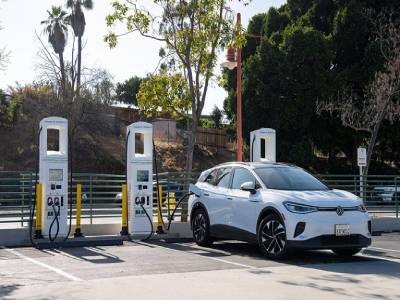
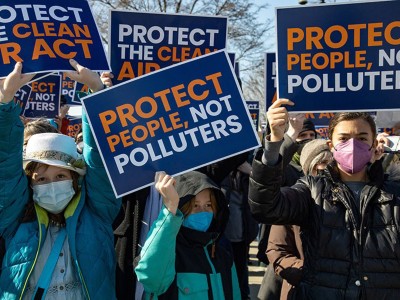
此外,拜登政府提出的这项雄心勃勃的规则,旨在减少汽车排放的气候污染,让人们对环保署致力于到2035年前实现美国电力行业的低碳化承诺更加期待。但是,该规定允许化石燃料发电厂在该日期之后继续排放。“这是一个很好的步骤,一个很好的框架,迟到了,但非常受欢迎,”纽约自然资源防御委员会(Natural Resources Defense Council)气候和清洁空气项目负责人大卫·多尼格(David Doniger)说。尽管如此,多尼格表示,他的团体将敦促环保署在最终规定中实施更严格的措施。该规则是否能够抵御法庭挑战,部分取决于CCS已经准备好进入主流的论点。许多专家表示,这是可能的,特别是考虑到旨在降低技术成本的新税收激励措施。“今天电力行业使用CCS的最大障碍是经济学,”马萨诸塞理工学院(Massachusetts Institute of Technology)研究CCS的工程师霍华德·赫尔佐格(Howard Herzog)说。
环保署的提议是去年6月美国最高法院作出的一项关
title_image: https://media.springernature.com/w290h158/magazine-assets/d41586-023-01595-9/d41586-023-01595-9_25345410.jpg
title_image_url: https://media.springernature.com/w290h158/magazine-assets/d41586-023-01595-9/d41586-023-01595-9_25345410.jpg
article_url: https://www.nature.com/articles/d41586-023-01595-9
article_html:
Some suspect that the new power-plant regulation proposed by the Biden administration is really designed to shut down coal-fired plants.
Credit: Jim Urquhart/Reuters
The administration of US President Joe Biden has proposed a
landmark regulation
that aims to curb emissions from the power sector in the United States over the next two decades. If it survives the legal challenges that are sure to come from power-plant operators and others, the rule could hasten an ongoing shift towards renewable energy in the country. It could also, perhaps, help to jump-start the use of a long-stalled — and controversial — technology that enables utilities to capture and bury carbon emissions from power plants fired by fossil fuels.
The much-anticipated regulation from the US Environmental Protection Agency (EPA), released on 11 May, lays out a range of proposed requirements for power plants fuelled by natural gas and coal, which are currently responsible for more than 1.5 billion tonnes of carbon dioxide (CO
2
) emissions annually in the United States — roughly a quarter of the country’s climate pollution. Large coal-fired power plants that plan to operate beyond 2040 would need to use carbon-capture and sequestration technology (CCS) to reduce their emissions by 90%, for instance; major gas-fired plants could deploy either CCS or transition to clean hydrogen (produced with minimal carbon emissions) as a fuel source. The EPA will accept comments on the proposal for 60 days.
Overall, the agency says that the rule could curb US emissions of CO
2
by more than one billion tonnes by 2042 — equivalent to the annual carbon emissions of Japan — while racking up as much as US$85 billion in climate and health benefits. “The public health and environmental benefits of this proposed rule will be tremendous,” said EPA administrator Michael Regan at a press conference on 10 May, and it will have minimal impacts on electricity prices.
The power-plant regulation arrives on the heels of
an ambitious rule proposed by the Biden administration to reduce climate pollution from cars
. Many scientists and environmentalists hoped that it would put teeth in the administration’s commitment to decarbonize the US power sector by 2035, but the regulation would allow fossil-fuel power plants to continue emitting well beyond that date.
“This is a good step and a good framework, long overdue but very welcome,” says David Doniger, who heads the climate and clean air programme at the Natural Resources Defense Council, an advocacy organization based in New York City. Nonetheless, Doniger says that his group will push the EPA to implement tougher measures in the final regulation.
Whether the rule holds up to court challenges will hinge in part on the argument that CCS is ready for prime time. Many experts say it is — particularly with new tax incentives intended to drive down the cost of the technology. “The biggest barrier to widespread use of CCS in the power industry today is economics,” says Howard Herzog, an engineer who studies CCS at the Massachusetts Institute of Technology in Cambridge.
Environmental Protection Agency administrator Michael Regan has said that the new rule would benefit public health.
Credit: Bonnie Cash/UPI/Shutterstock
This is a more conventional regulatory approach to limiting pollution than what the Obama administration attempted. It also fits in with the Supreme Court decision last year, which acknowledged the EPA’s authority to regulate emissions at the scale of individual power plants, says Julie McNamara, an energy analyst with the Union of Concerned Scientists, an advocacy group based in Cambridge, Massachusetts.
One of the core questions will be whether CCS is an economically viable technology — or whether the new EPA rule has actually been designed to push electric utilities away from fossil fuels and towards cleaner energy sources. Regan directly addressed this concern at the press conference. He acknowledged that some coal-fired power plants would close as a result of the rule, but added that “this is really a decision that will be made state by state, company by company”.
West Virginia attorney-general Patrick Morrisey has already issued a statement expressing dissatisfaction. The new rule, he said “just seems designed to scare more coal-fired power plants into retirement”. West Virginia has a large coal industry and last year helped to bring the case against the EPA to the Supreme Court. “We expect that we would once again prevail in court against this out-of-control agency,” he said.
McNamara says that the current EPA proposal is just one piece of a larger puzzle that includes other regulations on hazardous pollutants, as well as massive public-health incentives for low-carbon energy. The question facing regulators, utilities and communities will be what makes the most sense: investing in CCS technologies to prolong the life of a fossil-fuel industry with enormous impacts on climate and public health, or investing in clean energy? “We feel very strongly clean energy will be the superior choice,” McNamara says.
Technological viability
Although CCS technology has been demonstrated at only a handful of power plants around the world, interest is rising. This is particularly the case in countries such as China that depend heavily on coal, the dirtiest of fossil fuels, according to Jarad Daniels, who leads the Global CCS Institute, an advocacy group based in Melbourne, Australia, with offices in Washington DC. CCS is also moving forwards in sectors such as cement, steel and chemicals.
EPA officials say that the technology is ready to implement at a reasonable cost — or even a profit — depending on the plant. Many scientists and environmentalists agree. “If you ask, why hasn’t this technology been more widely used in the past, it’s because there are no regulations, and it’s cheaper to keep dumping emissions into the atmosphere for free,” Doniger says.
In a spending bill enacted last year, the US Congress boosted federal incentives for CCS in the power and other industrial sectors to US$85 per tonne of CO
2
, which experts say mostly offsets the cost of capturing the gas and pumping it underground. However,
economic modelling by multiple groups
suggests that this is still not enough to convince most electric utilities to embrace the technology, given falling costs for renewable-energy sources such as solar.
“The economics only pencil in for CCS in very specific settings,” says Ben King, an energy analyst with the Rhodium Group, a consultancy based in New York City. But clean-energy sources could face their own challenges in scaling up quickly, owing to potential bottlenecks with licensing, securing sites for facilities and delivering power over long-distance electric transmission lines.
An analysis by the Rhodium Group
suggests that regulatory requirements might yet enable CCS to gain a foothold in the power sector.
How things play out will vary by plant. Electric utilities will probably choose to close down older coal-fired power plants, for instance, whereas some new gas-fired plants that run frequently could be candidates for a CCS retrofit, says John Thompson, an energy analyst with the Clean Air Task Force, an advocacy group based in Boston, Massachusetts. The scales could be tipped by a combination of economic incentives that lower the cost, and regulations that require action, he adds.
“What you get is synergies between the rule that says, ‘Thou shalt do this’, and the tax credit that says ‘This isn’t very expensive’,” Thompson says. “The potential is there for deep reductions in emissions.”
article_text: The administration of US President Joe Biden has proposed a landmark regulation that aims to curb emissions from the power sector in the United States over the next two decades. If it survives the legal challenges that are sure to come from power-plant operators and others, the rule could hasten an ongoing shift towards renewable energy in the country. It could also, perhaps, help to jump-start the use of a long-stalled — and controversial — technology that enables utilities to capture and bury carbon emissions from power plants fired by fossil fuels.
US aims for electric-car revolution — will it work?
The much-anticipated regulation from the US Environmental Protection Agency (EPA), released on 11 May, lays out a range of proposed requirements for power plants fuelled by natural gas and coal, which are currently responsible for more than 1.5 billion tonnes of carbon dioxide (CO2) emissions annually in the United States — roughly a quarter of the country’s climate pollution. Large coal-fired power plants that plan to operate beyond 2040 would need to use carbon-capture and sequestration technology (CCS) to reduce their emissions by 90%, for instance; major gas-fired plants could deploy either CCS or transition to clean hydrogen (produced with minimal carbon emissions) as a fuel source. The EPA will accept comments on the proposal for 60 days.
Overall, the agency says that the rule could curb US emissions of CO2 by more than one billion tonnes by 2042 — equivalent to the annual carbon emissions of Japan — while racking up as much as US$85 billion in climate and health benefits. “The public health and environmental benefits of this proposed rule will be tremendous,” said EPA administrator Michael Regan at a press conference on 10 May, and it will have minimal impacts on electricity prices.
The power-plant regulation arrives on the heels of an ambitious rule proposed by the Biden administration to reduce climate pollution from cars. Many scientists and environmentalists hoped that it would put teeth in the administration’s commitment to decarbonize the US power sector by 2035, but the regulation would allow fossil-fuel power plants to continue emitting well beyond that date.
How a dangerous stew of air pollution is choking the United States
“This is a good step and a good framework, long overdue but very welcome,” says David Doniger, who heads the climate and clean air programme at the Natural Resources Defense Council, an advocacy organization based in New York City. Nonetheless, Doniger says that his group will push the EPA to implement tougher measures in the final regulation.
Whether the rule holds up to court challenges will hinge in part on the argument that CCS is ready for prime time. Many experts say it is — particularly with new tax incentives intended to drive down the cost of the technology. “The biggest barrier to widespread use of CCS in the power industry today is economics,” says Howard Herzog, an engineer who studies CCS at the Massachusetts Institute of Technology in Cambridge.
The EPA proposal follows a key US Supreme Court ruling last June, which held that the agency had overstepped its authority under former president Barack Obama by crafting broad regulations that would have pushed the whole power sector towards cleaner energy sources, such as wind and solar. By contrast, the new EPA rule focuses on emissions reductions that can be achieved “inside the fence line” at individual power plants, with the best available technologies. These include CCS.
This is a more conventional regulatory approach to limiting pollution than what the Obama administration attempted. It also fits in with the Supreme Court decision last year, which acknowledged the EPA’s authority to regulate emissions at the scale of individual power plants, says Julie McNamara, an energy analyst with the Union of Concerned Scientists, an advocacy group based in Cambridge, Massachusetts.
One of the core questions will be whether CCS is an economically viable technology — or whether the new EPA rule has actually been designed to push electric utilities away from fossil fuels and towards cleaner energy sources. Regan directly addressed this concern at the press conference. He acknowledged that some coal-fired power plants would close as a result of the rule, but added that “this is really a decision that will be made state by state, company by company”.
West Virginia attorney-general Patrick Morrisey has already issued a statement expressing dissatisfaction. The new rule, he said “just seems designed to scare more coal-fired power plants into retirement”. West Virginia has a large coal industry and last year helped to bring the case against the EPA to the Supreme Court. “We expect that we would once again prevail in court against this out-of-control agency,” he said.
McNamara says that the current EPA proposal is just one piece of a larger puzzle that includes other regulations on hazardous pollutants, as well as massive public-health incentives for low-carbon energy. The question facing regulators, utilities and communities will be what makes the most sense: investing in CCS technologies to prolong the life of a fossil-fuel industry with enormous impacts on climate and public health, or investing in clean energy? “We feel very strongly clean energy will be the superior choice,” McNamara says.
Although CCS technology has been demonstrated at only a handful of power plants around the world, interest is rising. This is particularly the case in countries such as China that depend heavily on coal, the dirtiest of fossil fuels, according to Jarad Daniels, who leads the Global CCS Institute, an advocacy group based in Melbourne, Australia, with offices in Washington DC. CCS is also moving forwards in sectors such as cement, steel and chemicals.
US Supreme Court hobbles the EPA’s authority over climate emissions
EPA officials say that the technology is ready to implement at a reasonable cost — or even a profit — depending on the plant. Many scientists and environmentalists agree. “If you ask, why hasn’t this technology been more widely used in the past, it’s because there are no regulations, and it’s cheaper to keep dumping emissions into the atmosphere for free,” Doniger says.
In a spending bill enacted last year, the US Congress boosted federal incentives for CCS in the power and other industrial sectors to US$85 per tonne of CO2, which experts say mostly offsets the cost of capturing the gas and pumping it underground. However, economic modelling by multiple groups suggests that this is still not enough to convince most electric utilities to embrace the technology, given falling costs for renewable-energy sources such as solar.
“The economics only pencil in for CCS in very specific settings,” says Ben King, an energy analyst with the Rhodium Group, a consultancy based in New York City. But clean-energy sources could face their own challenges in scaling up quickly, owing to potential bottlenecks with licensing, securing sites for facilities and delivering power over long-distance electric transmission lines. An analysis by the Rhodium Group suggests that regulatory requirements might yet enable CCS to gain a foothold in the power sector.
How things play out will vary by plant. Electric utilities will probably choose to close down older coal-fired power plants, for instance, whereas some new gas-fired plants that run frequently could be candidates for a CCS retrofit, says John Thompson, an energy analyst with the Clean Air Task Force, an advocacy group based in Boston, Massachusetts. The scales could be tipped by a combination of economic incentives that lower the cost, and regulations that require action, he adds.
“What you get is synergies between the rule that says, ‘Thou shalt do this’, and the tax credit that says ‘This isn’t very expensive’,” Thompson says. “The potential is there for deep reductions in emissions.”
vocabulary:
"""{'reading_guide': '美国总统乔·拜登政府提出了一项里程碑式的规定,旨在在未来20年内抑制美国电力行业的排放。如果它能够抵御来自发电厂运营商和其他人的法律挑战,该规则可能会加速美国向可再生能源的转变。它也可能有助于重启一项长期停滞的有争议的技术,该技术可以帮助电力公司捕获和埋藏燃烧化石燃料的发电厂排放的碳。环保署(EPA)5月11日发布的这项备受期待的规定针对天然气和煤炭驱动的发电厂提出了一系列建议要求,目前这些发电厂每年在美国排放约15亿吨二氧化碳(CO2),占该国气候污染的四分之一。例如,计划在2040年后继续运营的大型燃煤发电厂将需要使用碳捕获和封存技术(CCS)将其排放量减少90%;主要的燃气发电厂可以采用CCS或转换为低碳排放的清洁氢(用最少的碳排放生产)作为燃料来源。环保署将接受对该提案的意见60天。综上所述,该机构表示,该规则可能会在2042年前使美国的二氧化碳排放减少10亿吨以上,相当于日本的年度碳排放量,同时可以获得高达850亿美元的气候和健康效益。环保署局长迈克尔·里根(Michael Regan)在5月10日的新闻发布会上表示,“这项拟议规则的公众健康和环境效益将是巨大的”,而且对电价的影响将是最小的。
此外,拜登政府提出的这项雄心勃勃的规则,旨在减少汽车排放的气候污染,让人们对环保署致力于到2035年前实现美国电力行业的低碳化承诺更加期待。但是,该规定允许化石燃料发电厂在该日期之后继续排放。“这是一个很好的步骤,一个很好的框架,迟到了,但非常受欢迎,”纽约自然资源防御委员会(Natural Resources Defense Council)气候和清洁空气项目负责人大卫·多尼格(David Doniger)说。尽管如此,多尼格表示,他的团体将敦促环保署在最终规定中实施更严格的措施。该规则是否能够抵御法庭挑战,部分取决于CCS已经准备好进入主流的论点。许多专家表示,这是可能的,特别是考虑到旨在降低技术成本的新税收激励措施。“今天电力行业使用CCS的最大障碍是经济学,”马萨诸塞理工学院(Massachusetts Institute of Technology)研究CCS的工程师霍华德·赫尔佐格(Howard Herzog)说。
环保署的提议是去年6月美国最高法院作出的一项关
long_sentences:
{'sentence 1': 'In a spending bill enacted last year, the US Congress boosted federal incentives for CCS in the power and other industrial sectors to US$85 per tonne of CO2, which experts say mostly offsets the cost of capturing the gas and pumping it underground.', 'sentence 2': 'What you get is synergies between the rule that says, ‘Thou shalt do this’, and the tax credit that says ‘This isn’t very expensive’, Thompson says.'}