- Thu 04 May 2023
- nature
- Sara Reardon

An MRI scan shows shrinkage around the front and sides of the brain of a person with early-onset Alzheimer's disease. Credit: Zephyr/SPL
For the second time, an experimental drug has been shown to reduce the cognitive decline associated with Alzheimer’s disease. On 3 May, pharmaceutical company Eli Lilly announced in a press release that its monoclonal antibody donanemab slowed mental decline by 35% for some participants in a 1,736-person trial — a rate comparable to that for competitor drug lecanemab. But researchers warn that until the full results are published, questions remain as to the drug’s clinical usefulness, as well as whether the modest benefit outweighs the risk of harmful side effects.
Like lecanemab, donanemab targets amyloid protein, which is thought to cause dementia by accumulating in the brain and damaging neurons. The trial results provide strong evidence that amyloid is a key driver of Alzheimer’s, says Jeffrey Cummings, a neuroscientist at the University of Nevada, Las Vegas. “These are transformative in an enormously important way from a scientific point of view,” he adds. “They’re terrific.”
FDA approves Alzheimer’s drug lecanemab amid safety concerns

But Marsel Mesulam, a neurologist at Northwestern University in Chicago, is more cautious. “The results that are described are extremely significant and impressive, but clinically their significance is doubtful,” he says, adding that the modest effect suggests that factors other than amyloid contribute to Alzheimer’s disease progression. “We’re heading to a new era — there’s room to cheer, but it’s an era that should make us all very sober, realizing that there will be no single magic bullet.”
In the press release, Eli Lilly said that people with mild Alzheimer’s who received donanemab showed 35% less clinical decline over 18 months than did those who received a placebo, and 40% less decline in their ability to perform daily tasks. The company, based in Indianapolis, Indiana, says that it will present the full results at a conference in July and publish them in a peer-reviewed journal. It plans to apply for approval by the US Food and Drug Administration (FDA) in the next two months.
Promising treatments
FDA approval would make donanemab the third new Alzheimer’s treatment in two years. In January, the agency granted accelerated approval to lecanemab, made by Biogen in Cambridge, Massachusetts, and Eisai in Tokyo. A study 1 published in November showed that lecanemab slowed cognitive decline in 1,800 patients by 27% over 18 months. The FDA had previously approved aducanumab, also made by Biogen and Eisai, on the basis of evidence that it could reduce amyloid plaques in the brain, although it is still unclear whether this leads to a meaningful clinical benefit for people with the disease.
Eli Lilly’s donanemab trial differed from Biogen’s lecanemab one in that people stopped taking the drug once their amyloid levels had dropped below a certain threshold. “The rationale is, if the target is gone, why keep shooting?” Cummings says. According to the press release, about half of the trial participants were able to stop taking the drug in less than one year.
More Alzheimer’s drugs head for FDA review: what scientists are watching
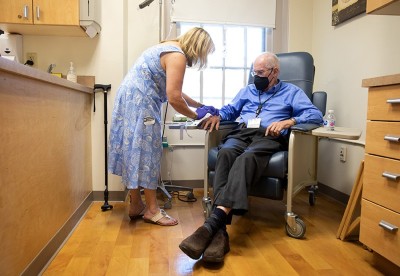
Diana Zuckerman, president of the National Center for Health Research, a non-profit think tank in Washington DC, worries that stopping the drug could cause the disease to rebound or worsen, as is the case with many psychiatric drugs. She warns that longer-term follow-up studies will be needed. “Any time you’re doing anything that affects the brain, you really do have to be cautious,” she says.
Eli Lilly also found that donanemab worked best in people whose brains contained only moderate levels of another protein, called tau, that is also associated with Alzheimer’s progression. The company had calculated its results among its 1,182 trial participants who had moderate tau levels, but said that the improvement was still statistically significant when they combined these patients with the 552 who had high levels of tau.
Brent Forester, a geriatric psychiatrist at McLean Hospital in Belmont, Massachusetts, says it’s “fascinating” that removing amyloid also affects tau: the relationship between the two proteins, and their respective roles in disease progression are not fully understood. “If we could understand that better, we might understand why removing amyloid might have a clinical effect,” he says.
Bleeding and seizures
Like lecanemab, donanemab carries a high risk of side effects — particularly a set of conditions called amyloid-related imaging abnormalities (ARIA) that can lead to seizures and bleeding in the brain. Researchers think that by attacking amyloid plaques, the antibodies inadvertently weaken blood vessels in the brain, and the effects are especially pronounced among people who are taking anticoagulant drugs. Eli Lilly’s press release said that ARIA rates were several times higher in people who received donanemab than in those who received placebos, and three patients in the trial died after experiencing the condition.
“The side effect is the biggest concern for all of us right now,” says Forester, who led earlier trials of donanemab and is currently working on a lecanemab trial. He adds that people with mild cognitive impairment function fairly well, and that even three deaths might be enough to signal that the risk of side effects outweighs the benefit of taking the drug.
Could drugs prevent Alzheimer’s? These trials aim to find out

Questions also remain about information that is missing from the announcement, including whether donanemab worked at all among people who had high levels of tau. “This whole publication-by-press-release is really bad,” Zuckerman says.
Furthermore, the results that Eli Lilly released show only a slowing of cognitive decline relative to the placebo group, rather than how much donanemab affects the absolute rate of a person’s decline. It’s unclear, Zuckerman says, whether that difference is great enough to be noticeable to people with Alzheimer’s and their families.
With at least three monoclonal antibodies soon to be on the market, Mesulam worries that excitement around them will decrease drug companies’ enthusiasm for developing drugs for Alzheimer’s targets other than amyloid. “The next 20 to 25 years will be taken up by better amyloid drugs,” he says. The Alzheimer’s market is likely to be very lucrative for drug companies — lecanemab, for instance, costs more than US$26,000 per year of treatment — but Mesulam worries that the cost of Alzheimer’s drugs will strain the US health-care system.
Still, the initial results provide “further support that this therapy will have some role with the right patients at the right time in illness”, Forester says. “I’m cautiously optimistic.”
article_text: For the second time, an experimental drug has been shown to reduce the cognitive decline associated with Alzheimer’s disease. On 3 May, pharmaceutical company Eli Lilly announced in a press release that its monoclonal antibody donanemab slowed mental decline by 35% for some participants in a 1,736-person trial — a rate comparable to that for competitor drug lecanemab. But researchers warn that until the full results are published, questions remain as to the drug’s clinical usefulness, as well as whether the modest benefit outweighs the risk of harmful side effects. Like lecanemab, donanemab targets amyloid protein, which is thought to cause dementia by accumulating in the brain and damaging neurons. The trial results provide strong evidence that amyloid is a key driver of Alzheimer’s, says Jeffrey Cummings, a neuroscientist at the University of Nevada, Las Vegas. “These are transformative in an enormously important way from a scientific point of view,” he adds. “They’re terrific.”
FDA approves Alzheimer’s drug lecanemab amid safety concerns
But Marsel Mesulam, a neurologist at Northwestern University in Chicago, is more cautious. “The results that are described are extremely significant and impressive, but clinically their significance is doubtful,” he says, adding that the modest effect suggests that factors other than amyloid contribute to Alzheimer’s disease progression. “We’re heading to a new era — there’s room to cheer, but it’s an era that should make us all very sober, realizing that there will be no single magic bullet.” In the press release, Eli Lilly said that people with mild Alzheimer’s who received donanemab showed 35% less clinical decline over 18 months than did those who received a placebo, and 40% less decline in their ability to perform daily tasks. The company, based in Indianapolis, Indiana, says that it will present the full results at a conference in July and publish them in a peer-reviewed journal. It plans to apply for approval by the US Food and Drug Administration (FDA) in the next two months. FDA approval would make donanemab the third new Alzheimer’s treatment in two years. In January, the agency granted accelerated approval to lecanemab, made by Biogen in Cambridge, Massachusetts, and Eisai in Tokyo. A study1 published in November showed that lecanemab slowed cognitive decline in 1,800 patients by 27% over 18 months. The FDA had previously approved aducanumab, also made by Biogen and Eisai, on the basis of evidence that it could reduce amyloid plaques in the brain, although it is still unclear whether this leads to a meaningful clinical benefit for people with the disease. Eli Lilly’s donanemab trial differed from Biogen’s lecanemab one in that people stopped taking the drug once their amyloid levels had dropped below a certain threshold. “The rationale is, if the target is gone, why keep shooting?” Cummings says. According to the press release, about half of the trial participants were able to stop taking the drug in less than one year.
More Alzheimer’s drugs head for FDA review: what scientists are watching
Diana Zuckerman, president of the National Center for Health Research, a non-profit think tank in Washington DC, worries that stopping the drug could cause the disease to rebound or worsen, as is the case with many psychiatric drugs. She warns that longer-term follow-up studies will be needed. “Any time you’re doing anything that affects the brain, you really do have to be cautious,” she says. Eli Lilly also found that donanemab worked best in people whose brains contained only moderate levels of another protein, called tau, that is also associated with Alzheimer’s progression. The company had calculated its results among its 1,182 trial participants who had moderate tau levels, but said that the improvement was still statistically significant when they combined these patients with the 552 who had high levels of tau. Brent Forester, a geriatric psychiatrist at McLean Hospital in Belmont, Massachusetts, says it’s “fascinating” that removing amyloid also affects tau: the relationship between the two proteins, and their respective roles in disease progression are not fully understood. “If we could understand that better, we might understand why removing amyloid might have a clinical effect,” he says. Like lecanemab, donanemab carries a high risk of side effects — particularly a set of conditions called amyloid-related imaging abnormalities (ARIA) that can lead to seizures and bleeding in the brain. Researchers think that by attacking amyloid plaques, the antibodies inadvertently weaken blood vessels in the brain, and the effects are especially pronounced among people who are taking anticoagulant drugs. Eli Lilly’s press release said that ARIA rates were several times higher in people who received donanemab than in those who received placebos, and three patients in the trial died after experiencing the condition. “The side effect is the biggest concern for all of us right now,” says Forester, who led earlier trials of donanemab and is currently working on a lecanemab trial. He adds that people with mild cognitive impairment function fairly well, and that even three deaths might be enough to signal that the risk of side effects outweighs the benefit of taking the drug.
Could drugs prevent Alzheimer’s? These trials aim to find out
Questions also remain about information that is missing from the announcement, including whether donanemab worked at all among people who had high levels of tau. “This whole publication-by-press-release is really bad,” Zuckerman says. Furthermore, the results that Eli Lilly released show only a slowing of cognitive decline relative to the placebo group, rather than how much donanemab affects the absolute rate of a person’s decline. It’s unclear, Zuckerman says, whether that difference is great enough to be noticeable to people with Alzheimer’s and their families. With at least three monoclonal antibodies soon to be on the market, Mesulam worries that excitement around them will decrease drug companies’ enthusiasm for developing drugs for Alzheimer’s targets other than amyloid. “The next 20 to 25 years will be taken up by better amyloid drugs,” he says. The Alzheimer’s market is likely to be very lucrative for drug companies — lecanemab, for instance, costs more than US$26,000 per year of treatment — but Mesulam worries that the cost of Alzheimer’s drugs will strain the US health-care system. Still, the initial results provide “further support that this therapy will have some role with the right patients at the right time in illness”, Forester says. “I’m cautiously optimistic.” vocabulary:
{'Monoclonal': '单克隆抗体:一种由单个克隆细胞制成的抗体,可以用来攻击特定的抗原','Amyloid': '淀粉样蛋白:一种蛋白质,可以在脑部积聚,导致痴呆','Lecanemab': '利卡内马布:一种抗体,可以攻击淀粉样蛋白,被认为是导致痴呆的原因之一','Donanemab': '多纳内马布:一种抗体,可以攻击淀粉样蛋白,被认为是导致痴呆的原因之一','Aducanumab': '阿杜卡努马布:一种抗体,可以减少脑部淀粉样斑块,但尚不清楚是否会对患有痴呆症的人产生有意义的临床效益','Tau': 'τ蛋白:一种蛋白质,与阿尔茨海默病的进展有关','ARIA': '淀粉样成像异常:一种状况,可能导致脑部出血和癫痫发作,由于攻击淀粉样斑块而被诱发','Anticoagulant': '抗凝药:一种药物,可以阻止血液凝固','Placebo': '安慰剂:一种没有药效的药物,用于与药物进行对照实验','Accelerated': '加速:加快进程','Statistically': '统计学上:按照统计学原理','Significant': '重要的:有意义的','Cautious': '谨慎的:小心的','Rebound': '反弹:反弹回去','Psychiatric': '精神病学:研究精神疾病的学科','Absolute': '绝对的:完全的','Lucrative': '有利可图的:有利可图的','Strain': '紧张:紧张','Enthusiasm': '热情:热情','Cognitive': '认知的:认知的'} readguide:
{'reading_guide': '本文讲述了第二次实验药物可以减缓阿尔茨海默病相关的认知衰退,药物制造商Eli Lilly公司宣布其单克隆抗体donanemab可以减缓1736人参与试验中的一些参与者的心智衰退35%,这一比率与竞争药物lecanemab相当。但研究人员警告,在发布完整结果之前,关于药物的临床有用性以及有限的好处是否超过有害副作用的风险仍然存在疑问。文章还提到了FDA批准的阿尔茨海默病药物lecanemab,以及Biogen和Eisai公司的aducanumab,以及Eli Lilly的donanemab试验,以及它们的副作用,以及未来可能的发展。'} long_sentences:
{'sentence 1': 'The trial results provide strong evidence that amyloid is a key driver of Alzheimer’s, says Jeffrey Cummings, a neuroscientist at the University of Nevada, Las Vegas. “These are transformative in an enormously important way from a scientific point of view,” he adds. “They’re terrific.”', 'sentence 2': 'In the press release, Eli Lilly said that people with mild Alzheimer’s who received donanemab showed 35% less clinical decline over 18 months than did those who received a placebo, and 40% less decline in their ability to perform daily tasks.'}
sentence 1: 該試驗結果提供了強有力的證據,表明阿爾茨海默病的關鍵驅動力是澱粉體,美國內華達大學的神經科學家Jeffrey Cummings說:“從科學的角度來看,這些都是非常重要的轉變。”他補充說:“它們太棒了。”
sentence 2: 在新聞稿中,礎力利製藥公司表示,接受donanemab治療的輕度阿爾茨海默病患者,在18個月內的臨床退化程度比接受安慰劑的患者低35%,日常活動能力下降幅度也比安慰劑組低40%。