- Mon 01 May 2023
- nature
- Dyani Lewis

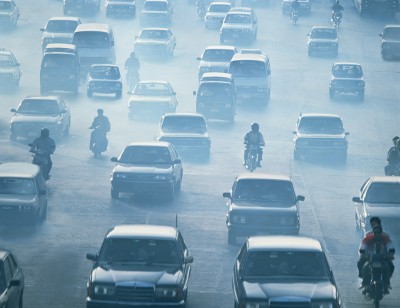
Parts of China continue to be affected by heavy smog. Credit: Getty
Over the past decade, China’s once-pollution-choked skies have steadily improved, according to more than two decades of atmospheric measurements taken by NASA satellites. But researchers say that there is still a long way to go to clean China’s air and protect the health of its citizens.
The speed at which China has reduced its air pollution has been “impressive”, says Chi Li, an atmospheric scientist at Washington University in St. Louis, Missouri, owing to technological solutions and ambitious policies.

Source: Atmospheric Composition Analysis Group, Washington Univ. St. Louis
Each year, air pollution is responsible for more than four million premature deaths globally — including an estimated one million in China — primarily from heart disease, lung cancer and respiratory illnesses. Fine particulate matter with a diameter of 2.5 micrometres or less — referred to as PM 2.5 — is the most concerning air pollutant, says Li.
The university’s Atmospheric Composition Analysis Group, which Li is part of, monitors various pollutants and estimates their global health impacts. The data for China show that from the late 1990s, average annual PM 2.5 exposure in the country rose from 35 to more than 50 micrograms per cubic metre, before levelling out around 2006 at between 50 and 60 1 . Since 2013, PM 2.5 levels have steadily declined, and in 2021, the average annual exposure was 33.3 micrograms per cubic metre (see ‘Fresh air’). That’s below the nation’s air-quality standard of 35, but still much higher than the recommended level of 5 set by the World Health Organization (WHO), based in Geneva, Switzerland.
Smokestack solutions
The decline in PM 2.5 is the result of targeted efforts by China over the past two decades to address poor air quality. Upgrades to coal-fired power plants have had the biggest effect so far, says Qiang Zhang, an atmospheric scientist at Tsinghua University in Beijing.
Since 2004, the Chinese government has provided subsidies to retrofit smokestacks in coal-fired power plants with filters and other equipment to remove sulfur dioxide — a molecule that reacts with other compounds in the atmosphere to form PM 2.5 particles — from emissions.
How air pollution causes lung cancer — without harming DNA
In 2013, China released its air-pollution prevention and control action plan, which further tightened standards for industrial emissions, and shut down small, inefficient power generators and industrial operators.
An analysis by Zhang and his colleagues shows that these measures accounted for 81% of the reductions to PM 2.5 emissions between 2013 and 2017 2 .
Further reductions could lead to fewer heavy-pollution days — driven by industrial emissions and cold weather that prevents dispersal — when the daily PM 2.5 concentration can exceed 200 micrograms per cubic metre. Last year, China’s government set a target to eliminate heavy-pollution days by 2025.
But there’s still a long way to go. In 2021, the WHO lowered its recommended annual-exposure limit for PM 2.5 from 10 to 5 micrograms per cubic metre, a level that most countries, including the United Kingdom, Germany, the United States and Canada, exceed.
Energy transition
Zhang says that the air-quality improvements from end-of-pipe technologies, such as smokestack filters, that target industrial emissions will eventually be exhausted. “Energy and the climate policies would definitely play more important roles in the future,” he says. These include efforts to supply more households with natural gas or electric heating systems in parts of rural China that still rely on coal and wood-fired stoves to heat their homes.
Electrical grids in rural areas are being upgraded to accommodate the increased capacity required for domestic heating, says Zhang, and the renewable-energy sector is expanding. But “it’s still a long way to go” before coal-fired power is replaced, he says.
China’s goal to become carbon neutral by 2060 will help to achieve that transition, and will keep its air pollution trending downwards, says Li. “It will ultimately be more and more clean in the future if the electricity source gets cleaner as well,” he says.
article_text: Over the past decade, China’s once-pollution-choked skies have steadily improved, according to more than two decades of atmospheric measurements taken by NASA satellites. But researchers say that there is still a long way to go to clean China’s air and protect the health of its citizens. The speed at which China has reduced its air pollution has been “impressive”, says Chi Li, an atmospheric scientist at Washington University in St. Louis, Missouri, owing to technological solutions and ambitious policies. Each year, air pollution is responsible for more than four million premature deaths globally — including an estimated one million in China — primarily from heart disease, lung cancer and respiratory illnesses. Fine particulate matter with a diameter of 2.5 micrometres or less — referred to as PM2.5 — is the most concerning air pollutant, says Li. The university’s Atmospheric Composition Analysis Group, which Li is part of, monitors various pollutants and estimates their global health impacts. The data for China show that from the late 1990s, average annual PM2.5 exposure in the country rose from 35 to more than 50 micrograms per cubic metre, before levelling out around 2006 at between 50 and 601. Since 2013, PM2.5 levels have steadily declined, and in 2021, the average annual exposure was 33.3 micrograms per cubic metre (see ‘Fresh air’). That’s below the nation’s air-quality standard of 35, but still much higher than the recommended level of 5 set by the World Health Organization (WHO), based in Geneva, Switzerland. The decline in PM2.5 is the result of targeted efforts by China over the past two decades to address poor air quality. Upgrades to coal-fired power plants have had the biggest effect so far, says Qiang Zhang, an atmospheric scientist at Tsinghua University in Beijing. Since 2004, the Chinese government has provided subsidies to retrofit smokestacks in coal-fired power plants with filters and other equipment to remove sulfur dioxide — a molecule that reacts with other compounds in the atmosphere to form PM2.5 particles — from emissions.
How air pollution causes lung cancer — without harming DNA
In 2013, China released its air-pollution prevention and control action plan, which further tightened standards for industrial emissions, and shut down small, inefficient power generators and industrial operators. An analysis by Zhang and his colleagues shows that these measures accounted for 81% of the reductions to PM2.5 emissions between 2013 and 20172. Further reductions could lead to fewer heavy-pollution days — driven by industrial emissions and cold weather that prevents dispersal — when the daily PM2.5 concentration can exceed 200 micrograms per cubic metre. Last year, China’s government set a target to eliminate heavy-pollution days by 2025. But there’s still a long way to go. In 2021, the WHO lowered its recommended annual-exposure limit for PM2.5 from 10 to 5 micrograms per cubic metre, a level that most countries, including the United Kingdom, Germany, the United States and Canada, exceed. Zhang says that the air-quality improvements from end-of-pipe technologies, such as smokestack filters, that target industrial emissions will eventually be exhausted. “Energy and the climate policies would definitely play more important roles in the future,” he says. These include efforts to supply more households with natural gas or electric heating systems in parts of rural China that still rely on coal and wood-fired stoves to heat their homes. Electrical grids in rural areas are being upgraded to accommodate the increased capacity required for domestic heating, says Zhang, and the renewable-energy sector is expanding. But “it’s still a long way to go” before coal-fired power is replaced, he says. China’s goal to become carbon neutral by 2060 will help to achieve that transition, and will keep its air pollution trending downwards, says Li. “It will ultimately be more and more clean in the future if the electricity source gets cleaner as well,” he says. vocabulary:
{'Pollutant': '污染物,指污染空气、水、土壤等环境的物质', 'Atmospheric': '大气的,指大气层', 'Particulate': '微粒的,指悬浮在空气中的微小颗粒', 'PM2.5': 'PM2.5是指空气中直径小于2.5微米的颗粒物,是空气污染的主要来源', 'Retrofit': '改装,指对旧设备进行改造以提高性能', 'Emissions': '排放,指污染物排放量', 'Sulfur dioxide': '二氧化硫,是一种有毒气体,是空气污染的主要来源', 'Dispersal': '分散,指污染物在空气中的分散', 'Concentration': '浓度,指污染物在空气中的浓度', 'Eliminate': '消除,指污染物的消除', 'Carbon neutral': '碳中和,指减少碳排放量,使碳排放量与碳汇收支相等', 'Transition': '转变,指从一种状态转变到另一种状态', 'Renewable': '可再生的,指可以重复利用的资源', 'Capacity': '容量,指设备的容量', 'Domestic': '家庭的,指家庭用品', 'Stove': '炉灶,指家庭用的炉灶', 'Grid': '网格,指电网', 'Accommodate': '容纳,指容纳更多的能源', 'Expanding': '扩张,指能源扩张', 'Neutral': '中性的,指碳排放量与碳汇收支相等', 'Trend': '趋势,指污染物排放量的趋势', 'Exhaust': '消耗,指污染物排放量的消耗'} readguide:
"""{'reading_guide': '过去十年来,中国曾经污染严重的天空已经逐渐改善,根据美国宇航局卫星进行的20多年大气测量结果表明。但研究人员表示,要清洁中国的空气,保护其公民的健康,还有很长的路要走。本文将讨论中国在减少空气污染方面取得的进展,以及未来可能采取的措施。'}""" long_sentences:
{'sentence 1': 'Each year, air pollution is responsible for more than four million premature deaths globally — including an estimated one million in China — primarily from heart disease, lung cancer and respiratory illnesses.', 'sentence 2': 'China’s goal to become carbon neutral by 2060 will help to achieve that transition, and will keep its air pollution trending downwards, says Li. “It will ultimately be more and more clean in the future if the electricity source gets cleaner as well,” he says.'}
Sentence 1: 每年,空气污染导致全球400多万人过早死亡,其中中国估计有100万人,主要是心脏病、肺癌和呼吸系统疾病。句子结构:主语+谓语+宾语+定语从句+定语从句+定语从句,句子语义:描述空气污染导致的死亡人数及其原因。
Sentence 2: 中国到2060年实现碳中和的目标将有助于实现这一转变,并将使空气污染趋势向下,李先生说。“如果电力来源变得更加清洁,未来将会越来越干净”,他说。句子结构:主语+谓语+宾语+宾语补足语+定语从句+宾语+宾补,句子语义:描述中国实现碳中和的目标将有助于空气污染趋势向下,并且未来会越来越干净。