- Wed 03 May 2023
- nature
- Myriam Vidal Valero

The pharmaceutical company GSK beat competitors when it had its respiratory syncytial virus (RSV) vaccine approved first. Credit: iStock/Getty
The US Food and Drug Administration (FDA) has approved GSK’s vaccine against respiratory syncytial virus (RSV) for use in people aged 60 years and older. This is the first RSV vaccine to gain approval anywhere in the world, and researchers are celebrating.
“It’s a very big deal to have options available to prevent RSV disease,” says Barney Graham, senior adviser for global-health-equity trials at Morehouse School of Medicine in Atlanta, Georgia.
Will a new wave of RSV vaccines stop the dangerous virus?
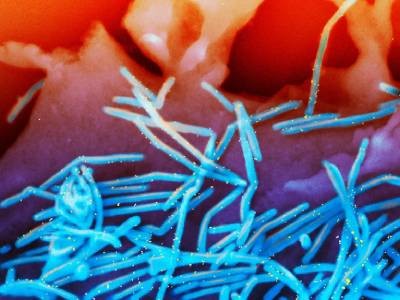
RSV usually causes mild symptoms similar to those that arise during a common cold. But for older people, it can be deadly. According to the US Centers for Disease Control and Prevention (CDC), each year RSV kills approximately 6,000 to 10,000 adults in the United States who are 65 years or older, and sends 60,000 to 160,000 to hospital. People in this age group with comorbidities such as chronic obstructive pulmonary disease, asthma or congestive heart failure are especially at risk.
The FDA approved GSK’s RSV vaccine, to be sold as Arexvy, on the basis of phase III clinical-trial data submitted by the pharmaceutical company, which is based in London. Those data showed that the shot reduced the risk of people aged 60 and older developing lower respiratory tract disease from RSV by 82.6% and that of developing severe disease by 94.1%. The results were published in February in The New England Journal of Medicine 1 .
The approval is “a tremendous opportunity to help address a really important public-health need”, says Leonard Friedland, vice-president and director of scientific affairs and public health for GSK’s US vaccines division.
A life’s work
The FDA expedited the approval of GSK’s vaccine last November, during a period when the United States was grappling with a ‘tripledemic’ of people with RSV, influenza or COVID-19 flooding hospitals .
The race to make vaccines for a dangerous respiratory virus
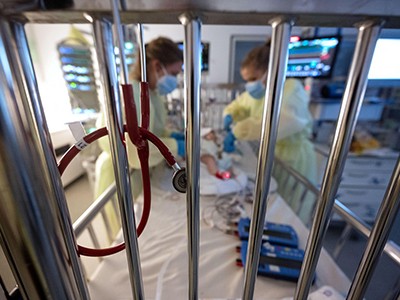
The technology underlying the RSV vaccine has been almost 60 years in the making . In the 1960s, during a clinical trial of an RSV vaccine, two of the participating children died and 80% ended up in hospital 2 . Understanding what had happened and finding a solution became Graham’s life’s work. “The first 20 years were spent primarily working out how to make a vaccine that could be safe,” he says.
The original vaccine contained an inactivated RSV virus. Eventually, the vaccine-research community pivoted its strategy.
In 2008, Graham teamed up with Jason McLellan and Peter Kwong at the US National Institutes of Health in Bethesda, Maryland, and others to investigate the structural biology of RSV. Over time, they learnt that the virus used protein F, a molecule on its surface, to infect human cells. With this knowledge, protein-based RSV vaccines could be developed that would introduce the molecule into cells to produce an immune response.
But the team eventually found that early jabs of this type had been designed around the wrong form of protein F, a ‘postfusion’ version that arises after the virus and cell have already joined. The researchers discovered a way to instead target the correct form of protein F, which hasn’t yet fully fused with any cell and was found to elicit neutralizing antibodies. They published their findings in 2013 3 .
Their work paved the way for companies such as GSK, Pfizer and Moderna to develop the RSV vaccines in the pipeline today. “This is my lifetime’s work. It’s very gratifying to see this finally happening,” Graham says. “It’s a good day for RSV.”
The race continues
After the approval of GSK’s vaccine, scientists hope others will follow. “There are many patients all around the world who can benefit from vaccination,” Friedland says.
RSV wave hammers hospitals — but vaccines and treatments are coming
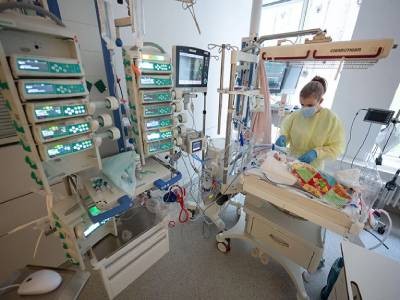
The pharmaceutical firm Pfizer, based in New York City, has also developed a protein-based RSV vaccine for people aged 60 and older that the FDA is expected to approve later this month. Biotechnology company Moderna in Cambridge, Massachusetts, has an mRNA-based vaccine for preventing RSV in adults in the same age group under expedited review at the agency.
Moreover, an FDA advisory panel will convene on 18 May to consider the safety and effectiveness of Pfizer’s RSV vaccine for pregnant people. During a phase III clinical trial, pregnant people who received the jab gave birth to newborn babies who were then monitored for illness. The vaccine reduced the risk of infants up to 90 days old having a severe lower respiratory tract illness from RSV by 81.8% 4 . The FDA will decide whether to approve the vaccine by August.
Like older adults, babies are at high risk from RSV. “RSV seems like a harmless thing,” but it’s not, says Mina Suh, a scientist at the company EpidStrategies who is based in Irvine, California, that evaluates epidemiological studies. Each year, 58,000 to 80,000 children in the United States who are aged 5 years and under are hospitalized because of RSV and 100 to 300 die, according to the CDC.
Newborn babies’ immune systems don’t respond robustly to many vaccines, so it is challenging to give them shots directly. To protect infants, Pfizer opted to immunize pregnant people a few months before they gave birth. Their bodies make the antibodies that are transferred to their newborn.
But before this next tranche of vaccines is approved, GSK’s jab will move ahead. It is expected to be approved in Europe soon. And the next step in the US process is for the CDC’s Advisory Committee on Immunization Practices to weigh in. The panel will recommend who can receive the GSK jab, how it is given and when it will it be available to the public. The committee’s next meeting is in June. This is an important step, Friedland says. “Vaccines don’t save lives. It’s vaccination that does.”
article_text: The US Food and Drug Administration (FDA) has approved GSK’s vaccine against respiratory syncytial virus (RSV) for use in people aged 60 years and older. This is the first RSV vaccine to gain approval anywhere in the world, and researchers are celebrating. “It’s a very big deal to have options available to prevent RSV disease,” says Barney Graham, senior adviser for global-health-equity trials at Morehouse School of Medicine in Atlanta, Georgia.
Will a new wave of RSV vaccines stop the dangerous virus?
RSV usually causes mild symptoms similar to those that arise during a common cold. But for older people, it can be deadly. According to the US Centers for Disease Control and Prevention (CDC), each year RSV kills approximately 6,000 to 10,000 adults in the United States who are 65 years or older, and sends 60,000 to 160,000 to hospital. People in this age group with comorbidities such as chronic obstructive pulmonary disease, asthma or congestive heart failure are especially at risk. The FDA approved GSK’s RSV vaccine, to be sold as Arexvy, on the basis of phase III clinical-trial data submitted by the pharmaceutical company, which is based in London. Those data showed that the shot reduced the risk of people aged 60 and older developing lower respiratory tract disease from RSV by 82.6% and that of developing severe disease by 94.1%. The results were published in February in The New England Journal of Medicine1. The approval is “a tremendous opportunity to help address a really important public-health need”, says Leonard Friedland, vice-president and director of scientific affairs and public health for GSK’s US vaccines division. The FDA expedited the approval of GSK’s vaccine last November, during a period when the United States was grappling with a ‘tripledemic’ of people with RSV, influenza or COVID-19 flooding hospitals.
The race to make vaccines for a dangerous respiratory virus
The technology underlying the RSV vaccine has been almost 60 years in the making. In the 1960s, during a clinical trial of an RSV vaccine, two of the participating children died and 80% ended up in hospital2. Understanding what had happened and finding a solution became Graham’s life’s work. “The first 20 years were spent primarily working out how to make a vaccine that could be safe,” he says. The original vaccine contained an inactivated RSV virus. Eventually, the vaccine-research community pivoted its strategy. In 2008, Graham teamed up with Jason McLellan and Peter Kwong at the US National Institutes of Health in Bethesda, Maryland, and others to investigate the structural biology of RSV. Over time, they learnt that the virus used protein F, a molecule on its surface, to infect human cells. With this knowledge, protein-based RSV vaccines could be developed that would introduce the molecule into cells to produce an immune response. But the team eventually found that early jabs of this type had been designed around the wrong form of protein F, a ‘postfusion’ version that arises after the virus and cell have already joined. The researchers discovered a way to instead target the correct form of protein F, which hasn’t yet fully fused with any cell and was found to elicit neutralizing antibodies. They published their findings in 20133. Their work paved the way for companies such as GSK, Pfizer and Moderna to develop the RSV vaccines in the pipeline today. “This is my lifetime’s work. It’s very gratifying to see this finally happening,” Graham says. “It’s a good day for RSV.” After the approval of GSK’s vaccine, scientists hope others will follow. “There are many patients all around the world who can benefit from vaccination,” Friedland says.
RSV wave hammers hospitals — but vaccines and treatments are coming
The pharmaceutical firm Pfizer, based in New York City, has also developed a protein-based RSV vaccine for people aged 60 and older that the FDA is expected to approve later this month. Biotechnology company Moderna in Cambridge, Massachusetts, has an mRNA-based vaccine for preventing RSV in adults in the same age group under expedited review at the agency. Moreover, an FDA advisory panel will convene on 18 May to consider the safety and effectiveness of Pfizer’s RSV vaccine for pregnant people. During a phase III clinical trial, pregnant people who received the jab gave birth to newborn babies who were then monitored for illness. The vaccine reduced the risk of infants up to 90 days old having a severe lower respiratory tract illness from RSV by 81.8%4. The FDA will decide whether to approve the vaccine by August. Like older adults, babies are at high risk from RSV. “RSV seems like a harmless thing,” but it’s not, says Mina Suh, a scientist at the company EpidStrategies who is based in Irvine, California, that evaluates epidemiological studies. Each year, 58,000 to 80,000 children in the United States who are aged 5 years and under are hospitalized because of RSV and 100 to 300 die, according to the CDC. Newborn babies’ immune systems don’t respond robustly to many vaccines, so it is challenging to give them shots directly. To protect infants, Pfizer opted to immunize pregnant people a few months before they gave birth. Their bodies make the antibodies that are transferred to their newborn. But before this next tranche of vaccines is approved, GSK’s jab will move ahead. It is expected to be approved in Europe soon. And the next step in the US process is for the CDC’s Advisory Committee on Immunization Practices to weigh in. The panel will recommend who can receive the GSK jab, how it is given and when it will it be available to the public. The committee’s next meeting is in June. This is an important step, Friedland says. “Vaccines don’t save lives. It’s vaccination that does.” vocabulary:
{'respiratory syncytial virus (RSV)': '呼吸道合胞病毒(RSV):一种常见的呼吸道病毒,可引起轻度症状,类似于普通感冒,但对老年人来说可能是致命的','comorbidities': '共病:指患者同时患有多种疾病','congestive': '充血性:指血液在血管中的滞留','tripledemic': '三重流行:指同时存在RSV、流感或COVID-19的流行病','postfusion': '后融合:指病毒和细胞已经融合后产生的','neutralizing': '中和:指抗体可以中和病毒的毒性','mRNA': 'messenger RNA:信使RNA,是一种由DNA转录而来的RNA,可以携带基因信息','advisory': '咨询:指提供建议的','epidemiological': '流行病学:指研究疾病在人群中的流行情况','robustly': '强有力地:指具有强大的力量','immunize': '免疫:指使机体具有抵抗病原体的能力','tranche': '一批:指一组','weigh in': '参与:指参与讨论','vaccination': '接种疫苗:指接种疫苗以预防疾病','transferred': '转移:指将抗体从母体转移到新生儿','robust': '强壮:指具有强大的力量','pivoted': '转折:指从一种状态转变到另一种状态','elicit': '引起:指引起某种反应','expedited': '加快:指加快审批过程'} readguide:
{'reading_guide': '美国食品药品监督管理局(FDA)批准了葛兰素史克(GSK)的呼吸道合胞病毒(RSV)疫苗,可用于60岁及以上人群。这是世界上第一种获得批准的RSV疫苗,研究人员正在庆祝。新一波RSV疫苗能否阻止这种危险病毒?RSV通常引起类似于普通感冒的轻微症状,但对老年人来说可能是致命的。根据美国疾病控制与预防中心(CDC)的数据,每年有6000至1万名65岁及以上的美国人死于RSV,6万至16万人住院治疗。患有慢性阻塞性肺病、哮喘或充血性心力衰竭等合并症的老年人尤其容易受到影响。FDA基于伦敦的制药公司提交的III期临床试验数据,批准了GSK的RSV疫苗,商品名为Arexvy。这些数据显示,这种注射剂可将60岁及以上人群患下呼吸道疾病的风险降低82.6%,患严重疾病的风险降低94.1%。这些结果于今年2月发表在《新英格兰医学杂志》上。这项批准是“解决一个非常重要的公共卫生需求的巨大机会”,GSK美国疫苗部门的科学事务和公共卫生副总裁Leonard Friedland说。去年11月,FDA加快了GSK疫苗的批准,当时美国正在应对RSV、流感或COVID-19涌入医院的“三重流行”。为危险的呼吸道病毒研制疫苗的竞赛RSV疫苗的技术已经发展了近60年。上世纪60年代,在一项RSV疫苗临床试验中,两名参与儿童死亡,80%的儿童住院治疗。了解发生了什么,找到解决方案成为格雷厄姆的终生工作。“前20年主要花在了如何制造一种安全的疫苗上”,他说。最初的疫苗含有一种不活化的RSV病毒。最终,疫苗研究界转向了策略。2008年,格雷厄姆与美国国立卫生研究院(NIH)位于马里兰州贝塞斯达的Jason McLellan和Peter Kwong以及其他人合作,研究RSV的结构生物学。随着时间的推移,他们了解到病毒利用蛋白F,一种位于其表面的分子,来感染人类细胞。有了这些知识,就可以开发基于蛋白的RSV疫苗,将分子引入细胞以产生免疫反应。但该小组最终发现,早期的疫苗是围绕错误的蛋白F形式设计的,这种“后融合”版本出现在病毒和细胞已经联合之后。研究人员发现了一种方法,可以针对正确的蛋白F形式,它尚未完全与任何细胞融合,并被发现可以产生中和抗体。他们在2013年发表了他们的发现。他们的工作为GSK、辉瑞(Pfizer long_sentences:
{'sentence 1': 'The FDA approved GSK’s RSV vaccine, to be sold as Arexvy, on the basis of phase III clinical-trial data submitted by the pharmaceutical company, which is based in London. Those data showed that the shot reduced the risk of people aged 60 and older developing lower respiratory tract disease from RSV by 82.6% and that of developing severe disease by 94.1%.', 'sentence 2': 'But before this next tranche of vaccines is approved, GSK’s jab will move ahead. It is expected to be approved in Europe soon. And the next step in the US process is for the CDC’s Advisory Committee on Immunization Practices to weigh in. The panel will recommend who can receive the GSK jab, how it is given and when it will it be available to the public. The committee’s next meeting is in June.'}
Sentence 1: FDA批准了GSK的RSV疫苗,商品名为Arexvy,是基于伦敦的制药公司提交的III期临床试验数据。这些数据显示,这种注射物可以将60岁及以上人群患RSV引起的下呼吸道疾病的风险降低82.6%,患严重疾病的风险降低94.1%。句子结构分析:这是一个复合句,主句是FDA批准了GSK的RSV疫苗,从句是基于伦敦的制药公司提交的III期临床试验数据,从句中的that引导定语从句,修饰shot,语义分析:这句话表明FDA批准了GSK的RSV疫苗,并且根据伦敦的制药公司提交的III期临床试验数据,这种注射物可以将60岁及以上人群患RSV引起的下呼吸道疾病的风险降低82.6%,患严重疾病的风险降低94.1%。
Sentence 2: 但是在这一批疫苗获批之前,GSK的疫苗将继续前进。预计它将在欧洲很快获得批准。美国进程的下一步是CDC的免疫实践咨询委员会参与。该小组将建议谁可以接种GSK疫苗,如何接种以及何时向公众开放。委员会的下一次会议将于6月举行。句子结构分析:这是一个复合句,主句是但是在这一批疫苗获批之前,GSK的疫苗将继续前进,从句是美国进程的下一步是CDC的免疫实践咨询委员会参与,从句中的that引导定语从句,修饰panel,语义分析:这句话表明在这一批疫苗获批之前,GSK的疫苗将继续前进,美国进程的下一步是CDC的免疫实践咨询委员会参与,该小组将建议谁可以接种GSK疫苗,如何接种以及何时向公众开放。